









Last updated July 28, 2026
Reviewed by Sasha Eslami, Level 3 IFS Practitioner · July 28, 2026
IFS and EMDR: A Powerful Integration for Trauma Healing
IFS and EMDR: A Powerful Integration for Trauma Healing
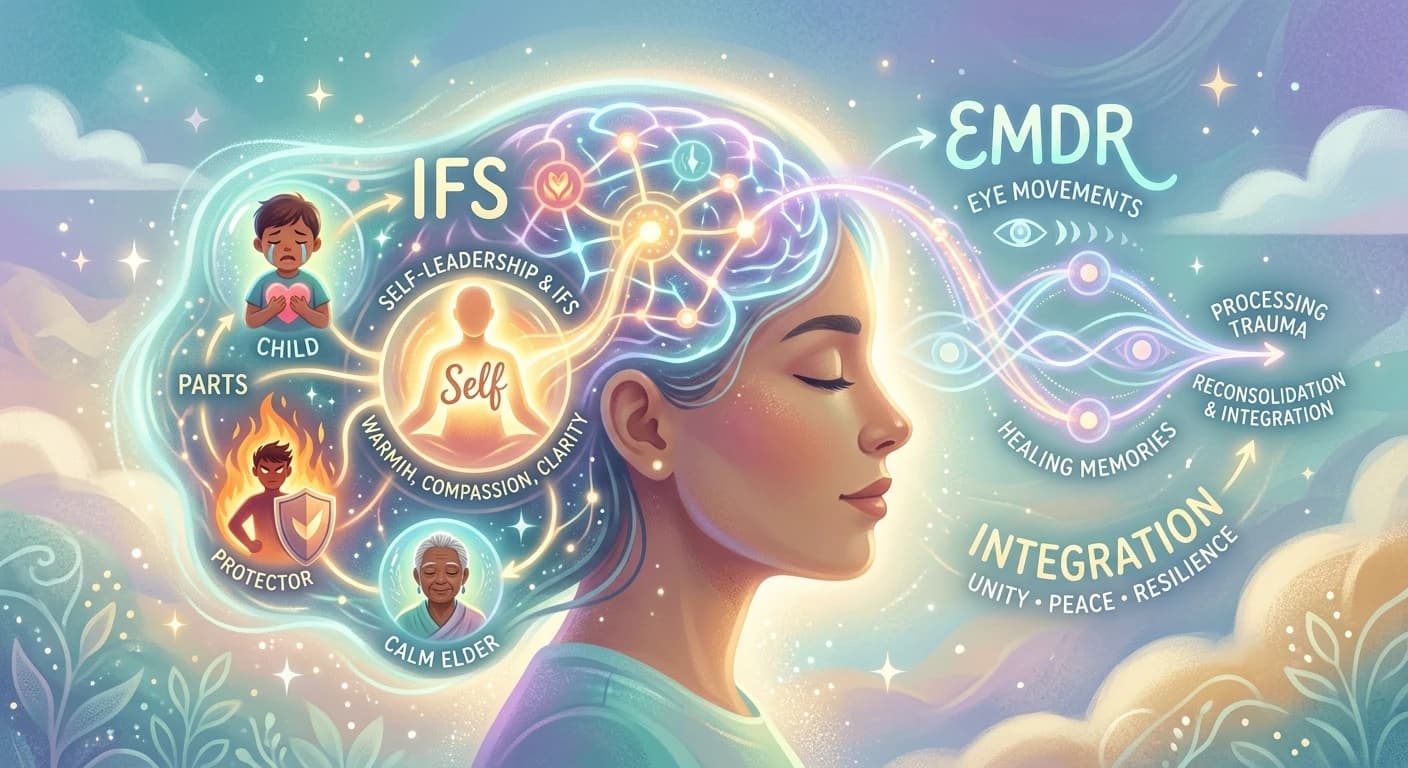
The Power of IFS and EMDR for Trauma Recovery
Internal Family Systems (IFS) and Eye Movement Desensitization and Reprocessing (EMDR) are powerful trauma therapies. IFS helps us befriend our internal Parts, while EMDR reprocesses painful memories. Together, they offer:
- Deeper emotional processing through compassionate Parts work
- Faster trauma resolution by tapping into EMDR’s effective reprocessing
- Reduced distress and dissociation via somatic and cognitive techniques working hand in hand
- Long-term healing that unburdens wounded Parts and fosters internal harmonyLearn more about IFS Basics here
Understanding IFS and EMDR: Two Complementary Approaches to Trauma
What is Internal Family Systems (IFS)?
Dr. Richard Schwartz created IFS, which sees the mind as a lively family of inner Parts, each with its own emotions and goals. Think of it as an internal soap opera—but with a happy twist!
Core Concepts of IFS:
- Self: Your calm, compassionate inner leader
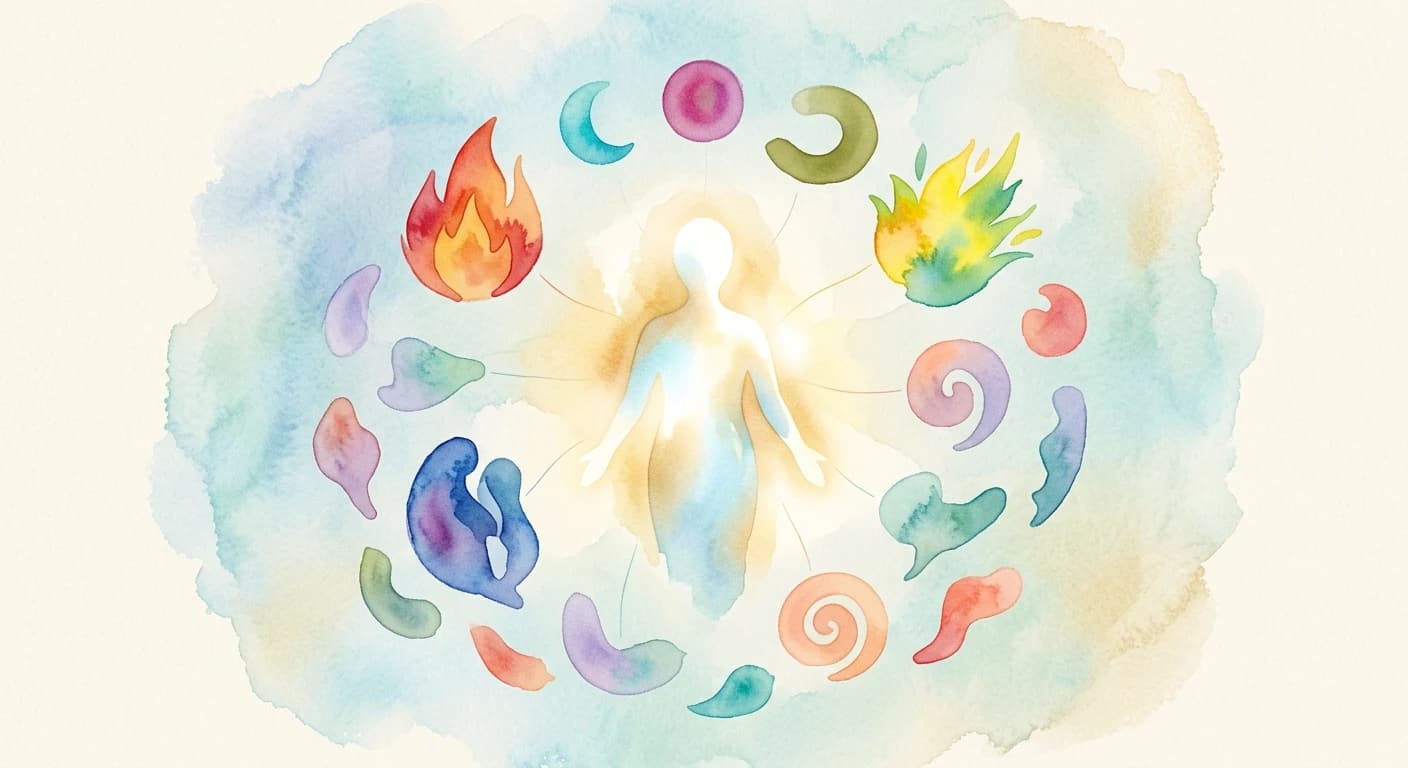
- Parts: Subpersonalities each with unique feelings and memories
- Exiles: Carry trauma and painful emotions
- Protectors: Managers/Firefighters who do their best to shield Exiles from pain
- Unburdening: Healing wounded Parts so they can relax and trust in the Self
IFS and Trauma:
When trauma hits, the Exiles end up carrying the pain while the Protectors work overtime trying to keep it buried. Healing usually looks something like this:
- Earning the Protectors’ trust
- Gently accessing and soothing Exiled Parts
- Embracing Self-leadership for harmony within
What is EMDR?
EMDR (Eye Movement Desensitization and Reprocessing), developed by Dr. Francine Shapiro, treats trauma by stimulating both sides of the brain — through eye movements, tapping, or sounds. The idea is to help the nervous system "digest" traumatic memories so they stop carrying such a heavy charge.
Core Principles of EMDR:
- Trauma is stored maladaptively in the brain
- Bilateral stimulation helps reprocess these memories
- Emotional charge decreases as the brain integrates and updates these distressing experiences
EMDR and Trauma:
EMDR helps you revisit traumatic memories without getting swallowed by them — like giving your brain a gentle push to finally file away the past.
Why IFS and EMDR Work Well Together
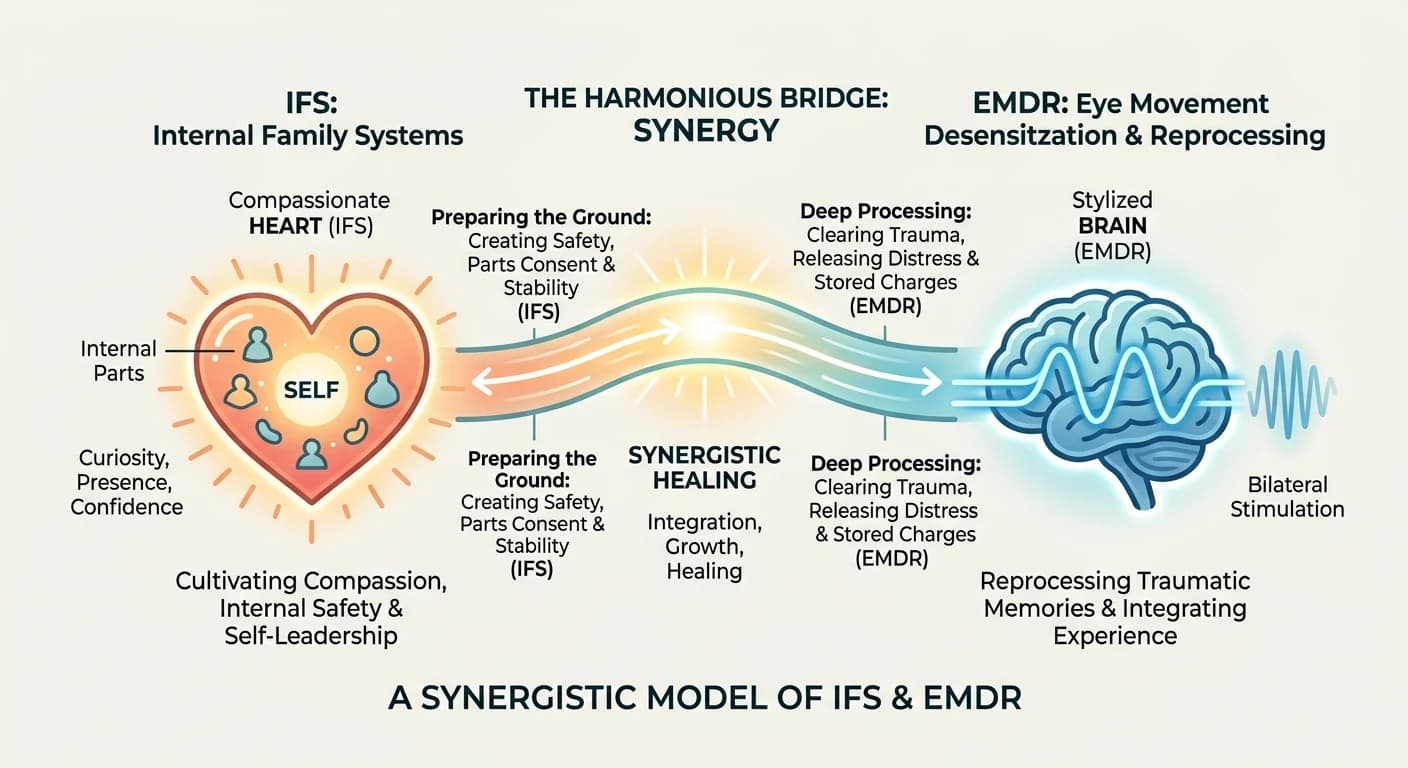
- IFS Provides a Safe Internal Structure for EMDR Processing EMDR can tap into deep trauma quickly, which can be overwhelming if the client’s Parts aren’t on board. IFS helps identify which Parts might freak out and ensures they feel safe before the memory work begins.
- Example: A client with childhood abuse has an Exile holding shame and a Firefighter turning to substance use for escape. IFS: Befriend the Firefighter first so it doesn’t sabotage EMDR. This reduces emotional flooding and boosts a sense of control.
- EMDR Helps IFS Clients Fully Process and Release Trauma Sometimes, in IFS, we find Exiles but still struggle to resolve the trauma fully. EMDR steps in to speed up reprocessing so those wounded Parts can truly unburden themselves. For more complex cases, exploring advanced techniques for healing trauma can be beneficial.
- Example: A Manager Part desperately trying to push down painful memories. IFS: Acknowledges the Manager’s fears. EMDR: Efficiently reprocesses the trauma, making the Manager’s job unnecessary.
Step-by-Step Guide: Integrating IFS and EMDR in Therapy
Phase 1: Preparation and Building Internal Trust
- Identify and Map Parts Use IFS language: “Which Part is freaking out about exploring this trauma?”
- Gain Permission from Protectors Protectors often say, “If we open that can of worms, we’ll never recover!” Ask them, “What do you need to feel safe?”
- Strengthen Self-Leadership Practice mindfulness or grounding so the client can stay in Self-energy instead of being overwhelmed by Parts.
Phase 2: EMDR Reprocessing with IFS Awareness
- Identify the Trauma Memory Ask, “Which memory still stings the most?” Keep the client connected to Self during recall.
- Engage in Bilateral Stimulation Eye movements, tapping, or auditory tones—whatever suits the client best. Encourage noticing any Parts that pop up (like an anxious Part suddenly wanting to bail!).
- Stay Curious About Parts That Resist If a Part tries to shut the process down, gently ask, “What are you afraid will happen if we go further?” Offer reassurance and collaboration, not force.
Phase 3: Integration and Unburdening
- Invite the Exile to Release the Burden After EMDR, use IFS to help the Exile genuinely let go of its pain. Visualization can help: “See that pain flowing away in a river.” For a deeper dive, check out our detailed guide on unburdening exiles.
- Help Protectors Find New Roles If the Exile isn’t drowning in pain anymore, the Protectors can relax. “What would you like to do now that you’re not babysitting the trauma?”
- Strengthen Internal Harmony Encourage daily Part check-ins. Practice self-compassion and curiosity toward any lingering triggers.

Case Study: IFS and EMDR in Action
Client: Sarah, 38, with childhood neglect trauma.
- IFS Mapping Found an Exile carrying deep shame. A Manager Part was blocking emotional expression to “keep her safe.”
- Gaining Permission The Manager worried Sarah would be “crushed” if she recalled the neglect. Therapist acknowledged Manager’s fears, negotiated safe boundaries.
- EMDR Processing During memory recall of childhood neglect, Sarah used bilateral stimulation. Emotional intensity dropped—she felt the memory, but it was less devastating.
- IFS Unburdening Sarah imagined her younger self feeling validated and cared for. The Manager relaxed since it no longer had to guard that Exile 24/7.
Result: Sarah felt an internal sense of relief, fewer shame attacks, and more emotional freedom.

Enhance Your IFS Journey with the IFS Guide App
The IFS Guide App offers 24/7 AI-guided IFS Sessions, Daily Check-Ins, adaptive Self-Healing Meditations, and Parts Mapping to visualize your Parts’ relationships. Additionally, you can join the In-App Community, explore guided Trailheads, set Reminders, and Track Parts to support your team’s shift toward Self-led leadership in real time.
DOWNLOAD IFS GUIDE APP HERE
Conclusion: Why IFS and EMDR Are a Powerful Combination
- IFS builds internal safety and respect for each Part.
- EMDR reprocesses tough memories so they lose their overwhelming power.
- Together, they ensure all Parts feel heard, healed, and harmonized.
For anyone working through trauma, combining IFS and EMDR offers a more complete, effective path toward real relief. Picture it as a well-matched dance: EMDR leads the reprocessing steps, while IFS makes sure every part of your internal “family” is moving in step. If you're new to this approach, consider joining our free IFS workshop to learn more.
What do you think of combining IFS with EMDR? These two approaches actually complement each other well when it comes to trauma recovery. Curious to hear your thoughts — let's keep talking.
Frequently Asked Questions About IFS and EMDR
Yes, many therapists seamlessly weave them together in a single session. IFS helps prepare your internal system, while EMDR is used to reprocess the specific memories once your Parts feel safe.
It depends on your unique needs. Often, therapists start with IFS to build internal trust and map out protective Parts before introducing EMDR to process the underlying trauma.
This is exactly where IFS shines! If EMDR feels too intense, it usually means a Protector Part is alarmed. You can pause EMDR and use IFS to comfort and understand that Protector until it feels safe to proceed.
Not necessarily. Many trauma-informed therapists are trained in both IFS and EMDR. However, if your current therapist only practices one, they might collaborate with another professional.
I
Written by
IFS Guide Editorial Team

Reviewed by
Sasha Eslami
Level 3 IFS Practitioner