









Last updated July 12, 2026
Reviewed by Sasha Eslami, Level 3 IFS Practitioner · July 12, 2026
IFS Effectiveness: Does IFS Really Work?

Therapy is not just about talking—it’s about transformation. Internal Family Systems (IFS) aims to go beyond symptom management by helping people build trust with their Parts and access Self-led compassion.
If you’re wondering about IFS effectiveness, this guide gives you the practical version: what the evidence says, who it may help, how it compares with other approaches, and a simple check-in you can try while reading.
If you’re new to the model, you can also explore the IFS learning hub for a broader foundation.
What Is Internal Family Systems (IFS)?
IFS, developed by Dr. Richard Schwartz in the 1980s, is based on the idea that the mind is made up of multiple “Parts,” each playing different roles in our emotional world. These Parts interact much like a family system, with some trying to protect us while others carry deep emotional pain.
The Three Types of Parts in IFS
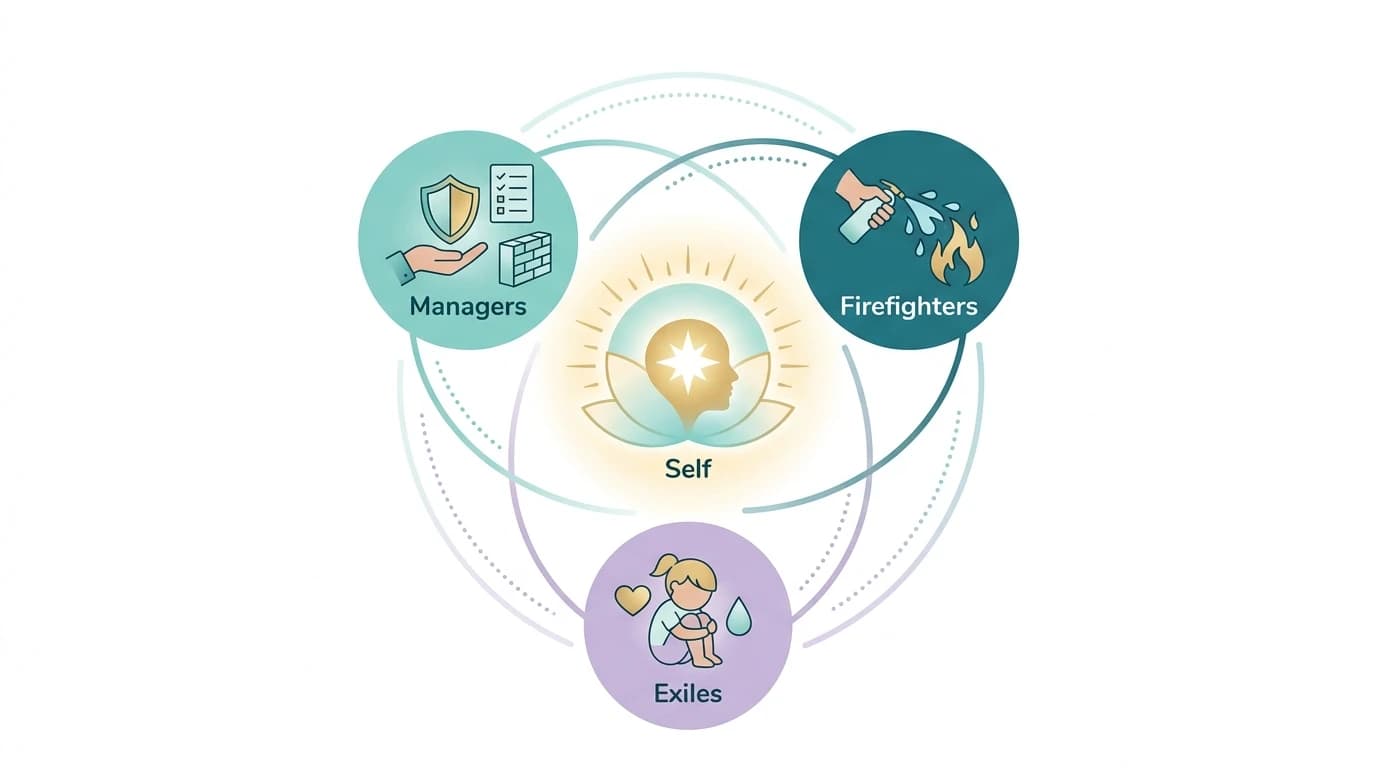
IFS often describes Parts in three broad roles:
Managers control, plan, and try to prevent emotional pain, such as perfectionism or people-pleasing.
Firefighters react quickly to numb pain, such as overeating, substance use, or avoidance.
Exiles hold deep wounds, shame, or trauma from past experiences.
For a deeper look at these roles, read how Managers, Firefighters, and Exiles work in IFS therapy.
At the core of every person is the Self, a calm, compassionate leader that can bring healing and balance to these Parts when engaged properly. (Think of it like the wise captain of your inner ship!)
But does this model translate into real-world effectiveness? Let’s explore. First, here’s a practical mini-check-in you can use while reading to get a feel for how IFS works in real life:
<b>Callout:</b> In IFS, the goal is not to “get rid of” difficult Parts. The goal is to understand what they are protecting, build trust, and let Self-energy lead.
- Notice the activated Part. Try saying: “A worried Part of me is here,” instead of “I am anxious.”
- Ask what the Part is trying to do for you. A simple question might be: “What are you afraid would happen if you stopped working so hard?”
- Listen without arguing. Try responding: “I hear how much you’re trying to protect me. I’m not here to force you to change.”
- Look for the vulnerable feeling underneath. Often, a protective Part is guarding shame, fear, grief, or old hurt.
- Offer reassurance from Self-energy. Try: “I’m here with you now. You don’t have to handle this alone.”
- Avoid the common mistake. Don’t use IFS to exile your protectors. IFS effectiveness often comes from building trust first.
Is IFS Evidence-Based?
The effectiveness of any therapy is often measured by scientific research, and IFS is no exception. (Who doesn’t love a little data to back things up? 📈😉)
Key Research Findings on IFS
1️⃣ Recognized as an Evidence-Based Therapy by SAMHSA
The Substance Abuse and Mental Health Services Administration (SAMHSA) officially recognizes IFS as an evidence-based practice for improving well-being. This places IFS in the same category as well-established therapies like Cognitive Behavioral Therapy (CBT).
2️⃣ Harvard Study on PTSD and IFS
A groundbreaking study at Harvard Medical School showed that IFS significantly reduced PTSD symptoms, with participants experiencing:
Reduced emotional reactivity.
Greater self-compassion.
Lasting symptom relief even months after therapy.

3️⃣ IFS for Chronic Pain and Physical Health
IFS has been studied for its mind-body connection. Research suggests that healing emotional wounds through IFS reduces physical pain, particularly in conditions like fibromyalgia and irritable bowel syndrome (IBS).
4️⃣ Neuroscience and Brain Imaging Studies
Emerging research using fMRI scans suggests that engaging in IFS activates self-regulation pathways in the brain, helping people manage emotions more effectively. 💡🧠
Real-World Applications: How IFS Helps Different Conditions
IFS is often used for emotional patterns that feel repetitive, protective, or rooted in earlier pain. Here are some of the most common areas where people explore IFS-informed work:

Trauma and PTSD Healing
IFS is considered one of the most trauma-informed therapies because it directly engages wounded Parts (Exiles) rather than suppressing them. Unlike CBT, which focuses on changing thoughts, IFS heals emotional wounds at the root. 🏆💔
💡 Example: A veteran with PTSD may have a Firefighter Part that drinks excessively to numb flashbacks. Instead of forcing the drinking to stop (which could cause distress), IFS would help understand why that Part is acting this way and work toward healing the underlying Exile carrying the trauma.
Anxiety and Overthinking
IFS can help people relate to anxious Parts with curiosity instead of criticism. Rather than fighting the overthinking Part, the person learns to ask what it is afraid would happen if it stopped scanning, planning, or preparing.
Depression and Low Self-Worth
IFS helps individuals heal wounded Parts that believe they are unworthy, often due to past trauma or criticism. Unlike traditional talk therapy, which may challenge negative beliefs, IFS guides people to deeply care for these Parts and release past burdens. 🌱💖
💡 Example: A client struggling with depression may have an Exile that believes they are unlovable. Instead of trying to “replace” that thought, IFS helps reconnect them with Self-energy, bringing compassion and healing. (A bit like giving your weary heart the warm hug it’s been waiting for! 🤗✨)
Addictions and Compulsive Behaviors
IFS treats addictions as Firefighter Parts trying to protect against overwhelming emotions. Instead of forcing these behaviors to stop, IFS:
✔ Builds trust with the Firefighter Part so it doesn’t feel the need to act out.
✔ Identifies the Exile it’s protecting and heals that underlying wound.
✔ Helps the Self take leadership so the individual can choose healthier coping strategies.
💡 Example: A client with food addiction may have a Part that binges to numb sadness. IFS helps by exploring the sadness instead of suppressing the urge to binge—giving that Firefighter a much-needed break. 🍔❌
Common Myths About IFS (and the Truth!)
🛑 “IFS is too ‘woo-woo’ and not scientific.”
✔ Truth: IFS is evidence-based and recognized by organizations like SAMHSA and Harvard Medical School.
🛑 “IFS is just about talking to yourself.”
✔ Truth: IFS is a structured therapy that guides clients through emotional healing, not just self-talk.
🛑 “IFS ignores thoughts and behaviors.”
✔ Truth: While IFS prioritizes emotions and healing, it also leads to long-term behavioral changes as Parts feel less burdened. (Because happier Parts mean happier habits! 😃🎉)

Enhance Your IFS Journey with the IFS Guide App 📱✨
The IFS Guide App can support your practice between therapy sessions with AI-guided IFS Sessions, Daily Check-Ins, Self-Healing Meditations, and Parts Mapping. It’s especially useful if you want a gentle structure for noticing Parts, tracking patterns, and returning to Self-led reflection in everyday life.
IFS Effectiveness: The Final Verdict ✅
Based on scientific studies, clinical applications, and personal success stories, IFS is a powerful and effective therapeutic model. (After all, who can argue with Harvard and happy hearts? 🏆💕)
✔ IFS is an evidence-based therapy recognized for its success in treating trauma, PTSD, anxiety, depression, and addiction.
✔ It provides deep healing by helping people understand, connect with, and unburden wounded Parts.
✔ It fosters self-compassion, allowing individuals to break free from old patterns and live with greater emotional balance.
While IFS may not be for everyone, especially those who prefer more structured approaches like CBT, it is a game-changer for those seeking deep emotional healing. (Think of it as a heart-friendly revolution in therapy! 🚀💗)
If you’re considering IFS, working with a trained therapist can help unlock its full potential. And remember—healing starts from within. 🕊️✨
Frequently Asked Questions About IFS Effectiveness
Yes, IFS is recognized as an evidence-based practice by SAMHSA and has been shown in studies, including those by Harvard Medical School, to be effective in treating PTSD, anxiety, and depression.
The timeline for IFS effectiveness varies by individual, but many people report noticing positive changes, reduced emotional reactivity, and increased self-compassion within a few months of consistent practice.
Absolutely. IFS is highly regarded for trauma healing because it safely engages wounded Parts (Exiles) rather than suppressing them, allowing for deep, lasting recovery at the root of the emotional wound.
Many people use IFS-informed reflection, journaling, meditations, or guided exercises on their own. However, if you are working with severe trauma, dissociation, self-harm urges, or overwhelming emotions, it is best to work with a trained IFS therapist or qualified mental health professional.
That is common at first. Parts may show up as body sensations, emotions, thoughts, images, impulses, or inner voices. You do not need a perfect map to begin; simply noticing “something in me feels scared” or “a Part of me wants to avoid this” is a useful starting point.
CBT often focuses on changing thoughts and behaviors, while EMDR focuses on reprocessing traumatic memories. IFS focuses on building a compassionate relationship with protective and wounded Parts so they can release burdens and trust Self-leadership over time.
How IFS Compares to Other Therapies
I
Written by
IFS Guide Editorial Team

Reviewed by
Sasha Eslami
Level 3 IFS Practitioner