









Last updated August 16, 2026
Reviewed by Sasha Eslami, Level 3 IFS Practitioner · August 16, 2026
IFS for Anxiety, Stress, and Overwhelm
Find Peace Within

Enhance Your IFS Journey with the IFS Guide App
Ever feel like anxiety, stress, or overwhelm leaves you frozen in place, emotionally numb, or disconnected from reality? IFS for anxiety offers a compassionate way to understand these inner reactions instead of fighting them. Whether it’s zoning out during a stressful meeting or feeling completely detached from your emotions, these responses are more common than you might think.
Anxiety, stress, overwhelm, freeze, numbness, and dissociation can all be protective mechanisms your mind uses to shield you from experiences that feel like too much. While they may serve as a temporary escape, they often leave you feeling stuck or fragmented. It’s like your brain hit the pause button and forgot where the play button went!
Internal Family Systems (IFS) offers a compassionate and effective way to address these experiences by understanding the Parts of you that drive these responses.
Explore the basics of Internal Family Systems
This article will dive into:
- Why freeze, numbness, and dissociation occur.
- How IFS helps you work with these states.
- Practical strategies to regain your sense of balance and peace.
Ready to reboot your inner system and find your center again? Let’s dive in!
Find Peace Within
In the IFS model, our minds are made up of various Parts, each with its own personality, motivations, and emotions. Anxiety, stress, and overwhelm often stem from Protectors that aim to shield you from perceived harm.

How Anxiety Functions as a Protector
Anxiety isn’t just random—it’s a signal from a Part trying to protect you. For example:
- A Perfectionist Part might push you to overprepare for fear of failure.
- A Worrier Part might keep you on edge, scanning for potential dangers.
While these Parts have good intentions, their efforts can leave you feeling exhausted and overwhelmed. It’s like having a relentless alarm clock that never lets you hit snooze!
What are Protectors in IFS?
Stress: A Response to Internal and External Pressure
Stress often arises when your system feels overloaded or unsupported. Parts responsible for managing your workload, relationships, and responsibilities may become hyperactive, leading to physical and emotional strain.

Signs your Parts are stressed:
- A sense of urgency or panic.
- Difficulty focusing or decision-making.
- Physical symptoms like tension headaches or fatigue.
Overwhelm: When the System Shuts Down
Overwhelm occurs when too many Parts are activated at once, each pulling you in different directions. For instance:
- A Part that wants you to excel at work clashes with a Part that feels the need to rest.
- A Protector Part trying to suppress emotions battles with an Exile Part pushing feelings to the surface.
This inner tug-of-war can leave you feeling paralyzed, unsure of where to start or how to move forward. It’s like trying to juggle flaming swords while riding a unicycle—impressive but exhausting!
What are Exiles in IFS?
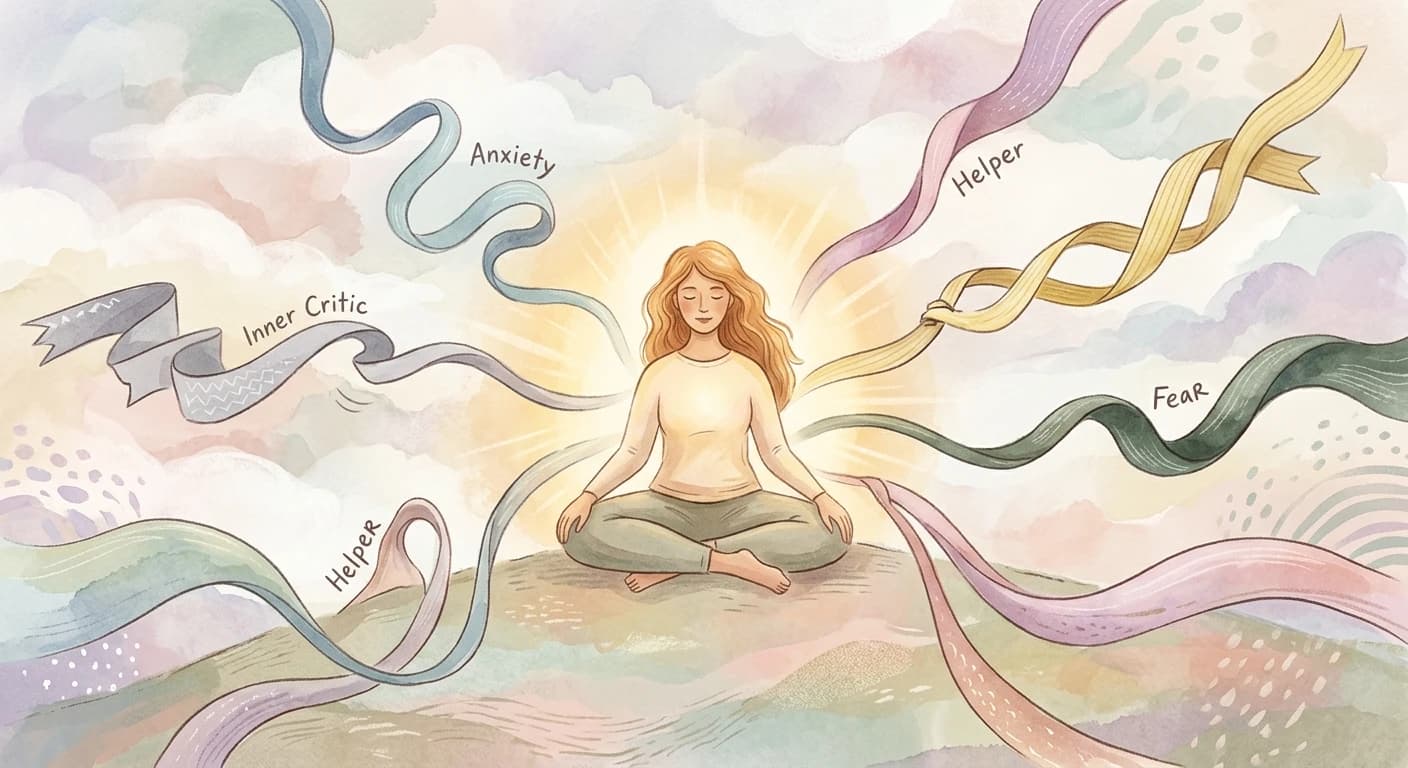
How IFS Helps with Anxiety, Stress, and Overwhelm
Rather than trying to eliminate these emotions, IFS helps you understand and harmonize the Parts that contribute to them. Here’s how:
1. Identifying Your Parts
The first step in IFS is recognizing the Parts driving your anxiety, stress, or overwhelm. Common Parts include:
- The Worrier: Scans for potential dangers, trying to keep you safe.
- The Perfectionist: Strives for excellence, fearing criticism or failure.
- The People-Pleaser: Pushes you to meet others’ expectations, even at your expense.
Ask yourself:
- What is this feeling trying to protect me from?
- Are there specific triggers that activate this feeling?
2. Building a Relationship with Your Parts
Once you’ve identified your Parts, IFS encourages you to approach them with curiosity and compassion. Instead of trying to silence or suppress them, engage in a dialogue.
Questions to ask your anxious or stressed Parts:
- “What are you afraid would happen if you didn’t feel this way?”
- “What are you trying to protect me from?”
- “How can I support you to feel less overwhelmed?”
This process helps you understand the positive intentions behind these Parts and reassures them that the Self—a calm, compassionate leader—is present to take charge.
3. Unburdening Emotional Wounds
Anxiety and stress often stem from deeper emotional wounds carried by Exiled Parts. For example:
- A Worrier Part may be protecting an Exile that experienced abandonment or rejection in the past.
- A Perfectionist Part may be shielding an Exile that felt unworthy unless they achieved perfection.
Through IFS, you can help these Exiled Parts release their burdens, freeing the Protectors from their extreme roles. It’s like finally clearing out that cluttered closet—suddenly, everything feels more spacious and manageable!
4. Cultivating Self-Leadership
The goal of IFS is to connect with your Self, the calm and compassionate core of your being. When your Self is leading:
- The Worrier can relax, knowing you’ll handle challenges.
- The Perfectionist can trust that your worth isn’t tied to achievements.
- The People-Pleaser can step back, allowing you to set healthy boundaries.
It’s like having a wise and serene captain steering your ship through stormy seas!
What is SELF in IFS?
Practical IFS Strategies to Manage Anxiety and Stress
Ready to reclaim your inner calm? Here are some IFS-inspired strategies to help you on your journey:
1. Pause and Name the Feeling
When anxiety or stress arises, pause and identify the feeling. Say to yourself, “A Part of me is feeling anxious right now,” rather than, “I’m anxious.” This simple shift creates space between your Self and the emotion.
2. Practice Self-Compassion
Remind your anxious or stressed Parts that their efforts are appreciated. Say, “Thank you for trying to protect me—I’m here to help.” It’s like giving your Parts a warm hug to let them know you’ve got their back!
3. Use Visualization
Imagine your anxious Part as a character or figure. Picture yourself sitting with it, offering reassurance and understanding. This helps create a sense of connection and compassion, making it easier to work through the emotions together.
4. Create a Soothing Routine
Incorporate calming activities like meditation, journaling, or nature walks to help your Parts feel supported. Establishing a routine can provide a sense of stability and peace, even on the busiest days.
5. Try the 6 F’s Process
Follow these steps to connect with your Parts:
- Find the Part causing the emotion.
- Focus your attention on it.
- Flesh Out its story.
- Feel Toward it with compassion.
- BeFriend it to build trust.
- Address its Fears to help it relax.
This structured approach helps you engage with your Parts in a meaningful and healing way.
Recorded IFS Workshop for Anxiety, Stress & Overwhelm
If you’re ready to dive deeper, the recorded IFS for Anxiety, Stress, Overwhelm workshop with Sasha Eslami offers practical guidance you can watch anytime and return to whenever your Parts need support. It’s designed to help you understand anxious, stressed, and overwhelmed Parts with more compassion and Self-leadership.
What You’ll Learn:
- How to identify and work with anxious and stressed Parts.
- Techniques for building Self-leadership to reduce overwhelm.
- Guided exercises to unburden emotional wounds.
For more guided support, you can watch the recorded IFS for Anxiety, Stress, Overwhelm workshop at your own pace.
The IFS Guide App: Your Partner in Peace
Stay connected to your inner work with the IFS Guide App, a powerful tool designed to help you:
- Track and engage with your Parts.
- Build daily habits to reduce anxiety and stress.
- Access guided meditations and exercises for overwhelm relief.
The Research Behind IFS for Anxiety and Stress
Research underscores the effectiveness of IFS in managing anxiety and stress. Key findings include:
- A study in the Journal of Counseling Psychology showed IFS significantly reduces anxiety symptoms.
- Participants report increased emotional resilience and self-compassion after IFS therapy.
- Neuroimaging studies reveal that IFS calms overactive areas of the brain linked to stress.
By addressing the root causes of emotional distress, IFS fosters long-term healing rather than short-term fixes. It’s like planting seeds for a forest of healing that grows stronger every day.
Final Thoughts: From Overwhelm to Inner Harmony
Anxiety, stress, and overwhelm don’t have to control your life. Through Internal Family Systems (IFS), you can transform these emotions from obstacles into opportunities for growth and self-understanding.
Healing isn’t about “melting the ice” overnight—it’s about finding the warmth within, one step at a time.

Your journey to calm and clarity starts today.
IFS can help you understand anxiety as a protective response from a Part of you, rather than something to fight or suppress. By approaching anxious Parts with curiosity and compassion, many people find more calm, clarity, and Self-leadership.
A simple starting point is to pause and say, “A Part of me is feeling anxious right now.” Notice where you feel it in or around your body, ask what it is trying to protect you from, and respond with appreciation rather than judgment.
IFS views stress and overwhelm as signs that multiple Parts may be activated, pressured, or afraid. Instead of forcing yourself to push through, IFS helps you slow down, identify the Parts involved, and support them from a calmer inner place.
IFS practices can be a powerful support for self-awareness and emotional regulation, but they are not a substitute for professional mental health care. If anxiety, stress, overwhelm, numbness, or dissociation feels intense or unsafe, consider working with a qualified therapist or healthcare provider.
I
Written by
IFS Guide Editorial Team

Reviewed by
Sasha Eslami
Level 3 IFS Practitioner