









Last updated August 5, 2026
Reviewed by Sasha Eslami, Level 3 IFS Practitioner · August 5, 2026
IFS for Behavior Change: Breaking Bad Habits and Installing Healthy Ones
Who this is for: Anyone who feels stuck in a loop of habits they wish they didn't have—procrastination, overeating, endless scrolling, whatever the pattern is—and wants a kinder way out that actually sticks.

A New Approach to Lasting Behavior Change
Ever find yourself stuck in a cycle of trying to change a habit, only to end up right back where you started? What if your habits weren’t just random actions, but messages from Parts of you trying to help? Internal Family Systems (IFS) therapy helps you uncover the deeper reasons behind your habits and make lasting changes by working with—not against—your internal system.
Let’s dive into how IFS can help you transform your habits.
Understanding Habits Through the Lens of IFS
When you use IFS to change habits, you look at those habits as coming from inner Parts of your mind. These Parts, however unhelpful their behavior might feel, usually mean well.
Why Do We Form Habits?
Habits form because the brain is always looking for ways to save effort. Every time you repeat an action in a consistent context, your brain notices the pattern and starts automating it — moving the behavior from conscious decision-making into something closer to reflex. This is efficient: if you had to consciously think through brushing your teeth or making coffee every morning, you'd burn through mental energy you need for harder problems.
- A Firefighter Part might turn to food or social media to distract you from overwhelming emotions.
- A Manager Part might push you to overwork, believing that productivity equals worth.
These Parts are like that friend who means well but keeps giving terrible advice. ("Eat a whole cake, you'll feel better!")
Learn more about what Managers & Firefighters in IFS
The Role of Protectors in Habit Formation
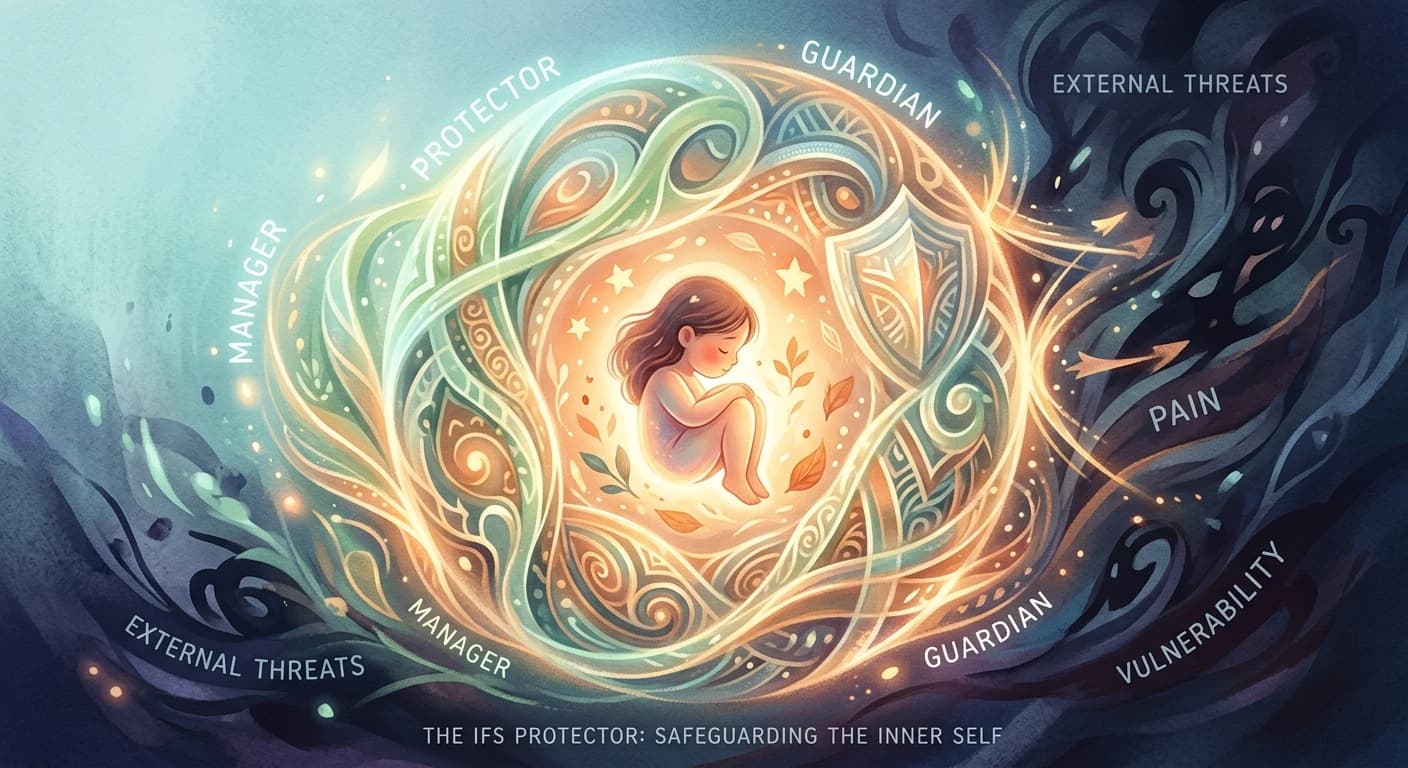
Protectors are Parts that step in to keep you safe from emotional pain. Habits are often the coping strategies these Parts rely on.
Common Protector-Driven Habits:
- Procrastination: A Protector trying to avoid failure or criticism.
- Overeating: A Firefighter soothing feelings of stress or rejection.
- Perfectionism: A Manager striving for control and approval.
These habits can be frustrating to live with, but they usually exist for a reason: they're attempts to protect Exiled Parts, the vulnerable parts of us that carry pain from past experiences.
How IFS Can Help You Break Bad Habits
IFS doesn't treat habits as enemies you need to fight — it treats them as signals worth listening to. Work with your Parts, and their roles can shift into something healthier.
- Identifying the Habit-Driving Part. The first step is recognizing the Part responsible for the habit. Pay attention to:The emotions or urges behind the habit.The situations or triggers that activate it.Example: Is a Part driving you to binge-watch TV after a tough day? It might be trying to help you escape feelings of overwhelm.
- The emotions or urges behind the habit.
- The situations or triggers that activate it.
- Building Compassionate Relationships with Parts. Rather than suppressing or judging the habit, approach the Part with curiosity:“What are you trying to protect me from?”“What do you hope to achieve with this habit?”It’s like sitting down with your habit over coffee and saying, “Alright, what’s your deal?”
- “What are you trying to protect me from?”
- “What do you hope to achieve with this habit?”
- Unburdening Emotional Pain. Habits often serve as shields for deeper emotional wounds carried by Exiled Parts. Through IFS, you can help these Parts release their burdens, allowing Protectors to step back and relax.
- Installing New Habits with Self-Leadership. When the Self takes the lead, your system can adopt healthier behaviors. Self-led habits come from a place of calm, clarity, and compassion, making them easier to sustain. What is SELF in IFS?

Enhance Your IFS Practice with the IFS Guide App
The IFS Guide App gives you AI-guided IFS Sessions any time, day or night, along with Daily Check-Ins, adaptive Self-Healing Meditations, and Parts Mapping to see how your Parts relate to one another. You can also join the In-App Community, work through guided Trailheads, set Reminders, and Track Parts as you work on changing your behavior.
DOWNLOAD IFS GUIDE APP HERE
Practical Strategies Using IFS for Behavior Change
Ready to kick those bad habits to the curb? Here are some IFS-inspired strategies to help you make lasting changes:
- Pause and Tune In. When you feel the urge to engage in a habit, pause and check in with yourself. Ask:“What am I feeling right now?”“Which Part is driving this urge?”Think of this as calling a quick “team meeting” with your Parts.
- “What am I feeling right now?”
- “Which Part is driving this urge?”
- Find the Part linked to the habit. Focus on its thoughts and emotions. Flesh Out its role and motivations. Feel toward it with compassion. Befriend it to build trust. Address its Fears about letting go of the habit. Use the 6 F’s Process. Follow these steps to connect with the habit-driving Part:
- Find the Part linked to the habit.
- Focus on its thoughts and emotions.
- Flesh Out its role and motivations.
- Feel toward it with compassion.
- Befriend it to build trust.
- Address its Fears about letting go of the habit. Use the 6 F’s Process. Follow these steps to connect with the habit-driving Part:
- Visualize a New Role for the Habit-Driving Part. Imagine what the Part might do if it didn’t rely on the habit. For example:A Firefighter might learn to relax through meditation instead of overeating.A Perfectionist might become a supportive cheerleader rather than a harsh critic.Visualizing this shift is like giving your habit a career makeover—“Congratulations, you’re now in mindfulness training!”
- A Firefighter might learn to relax through meditation instead of overeating.
- A Perfectionist might become a supportive cheerleader rather than a harsh critic.
- Create Small, Self-Led Rituals. Introduce rituals that align with your values and needs. For instance:Replace late-night scrolling with journaling or a gratitude practice.Swap stress eating for a short walk or deep breathing.These small changes can make a big difference over time!
- Replace late-night scrolling with journaling or a gratitude practice.
- Swap stress eating for a short walk or deep breathing.
- Trying to banish the Part: Forcing a habit to stop without understanding the Part's protective intention usually leads to a backlash.
- Skipping the Exiles: Changing the Protector's behavior without healing the underlying Exile's pain often results in a new, equally problematic habit taking its place.
- Rushing the process: Building trust with Parts takes time. Don't rush to the "fix" before the Part feels truly heard.
Common Mistakes When Changing Habits
The Science Behind IFS and Behavior Change
Research supports IFS as an effective approach for emotional regulation and habit formation.
Key Findings:
- A study in the Journal of Psychotherapy Integration found that IFS helps reduce anxiety and stress, often drivers of bad habits.
- Neuroimaging research reveals that IFS calms the brain’s fight-or-flight response, creating space for intentional behavior.
- By addressing the root causes of habits, IFS promotes sustainable, long-term change.
Explore the Transformative Power of IFS
If you're ready to take charge of your habits, check out our recorded IFS For Behavior Change (Removing Habits, Installing Habits) workshop. Taught by Sasha Eslami, this on-demand video course ($29) walks you through practical tools and guided exercises at your own pace, helping you:
- Identify and transform habit-driving Parts.
- Unburden emotional wounds tied to behaviors.
- Install new habits that align with your values and goals.
FAQs: IFS for Behavior Change
IFS helps by identifying the protective Parts of your mind that drive habits. Instead of fighting these habits, IFS fosters a compassionate relationship with these Parts, understanding their positive intentions and helping them find healthier roles.
Yes, in IFS, habits like procrastination or overeating are often seen as strategies used by Protector Parts (Managers or Firefighters) to shield you from emotional pain. By addressing the root cause, you can create lasting behavior change.
In IFS, we don't force Parts to change. If a Part is resistant, it usually means it doesn't feel safe yet or believes the habit is still necessary for your survival. The key is to spend more time building trust and understanding its fears before asking it to step back.
The timeline varies for everyone. Because IFS focuses on healing the root cause rather than just suppressing the behavior, it can take time to build trust with your Protectors and unburden your Exiles. However, once that healing occurs, the behavior change is often much more sustainable.
Conclusion: Creating Lasting Behavior Change with IFS
Habits aren't enemies to be defeated—they're protective strategies that have simply outlived their usefulness. When you approach your own behavior with curiosity and compassion instead of judgment, inner resistance turns into cooperation. The result:
- Less reliance on willpower
- Healthier coping mechanisms
- Greater inner peace and balance
So the next time you feel the pull toward an unwanted habit, pause. Get curious. Listen—every Part has something to teach you.
Final Reflection: What's one habit you've been struggling with lately? What part of you might be driving it — and can you meet that part with a little more compassion today?
Here's to reshaping your habits and leading yourself with a little more balance.
Happy healing on your path to inner harmony! Remember, your Self already carries everything it needs to guide you toward a more balanced, joyful life.
I
Written by
IFS Guide Editorial Team

Reviewed by
Sasha Eslami
Level 3 IFS Practitioner