









Last updated August 11, 2026
Reviewed by Sasha Eslami, Level 3 IFS Practitioner · August 11, 2026
IFS for Couples: Healing Relationships with Internal Family Systems

A Transformative Partnership for Healing
Who this is for: Couples navigating conflicts, struggling with intimacy, or looking to deepen their connection.
The problem: Relationships can feel like a rollercoaster—one moment filled with connection, the next with tension or miscommunication.
The promise: By the end of this guide, you'll understand how IFS for couples offers a powerful framework to break cycles of conflict, improve communication, and foster deep emotional intimacy.
IFS therapy for couples focuses on understanding and healing the “Parts” of yourself and your partner that influence your dynamics. By connecting with these Parts and fostering compassion, couples can transform their relationship.
Learn more about how IFS protectors operate.
In this article, we’ll explore:
- How IFS applies to relationships.
- Common relational patterns addressed in the IFS for Couples & Relationships Course.
- Practical insights into how this approach fosters connection.
- How you can start your journey with our expertly designed course.
What Is Internal Family Systems (IFS) Therapy?
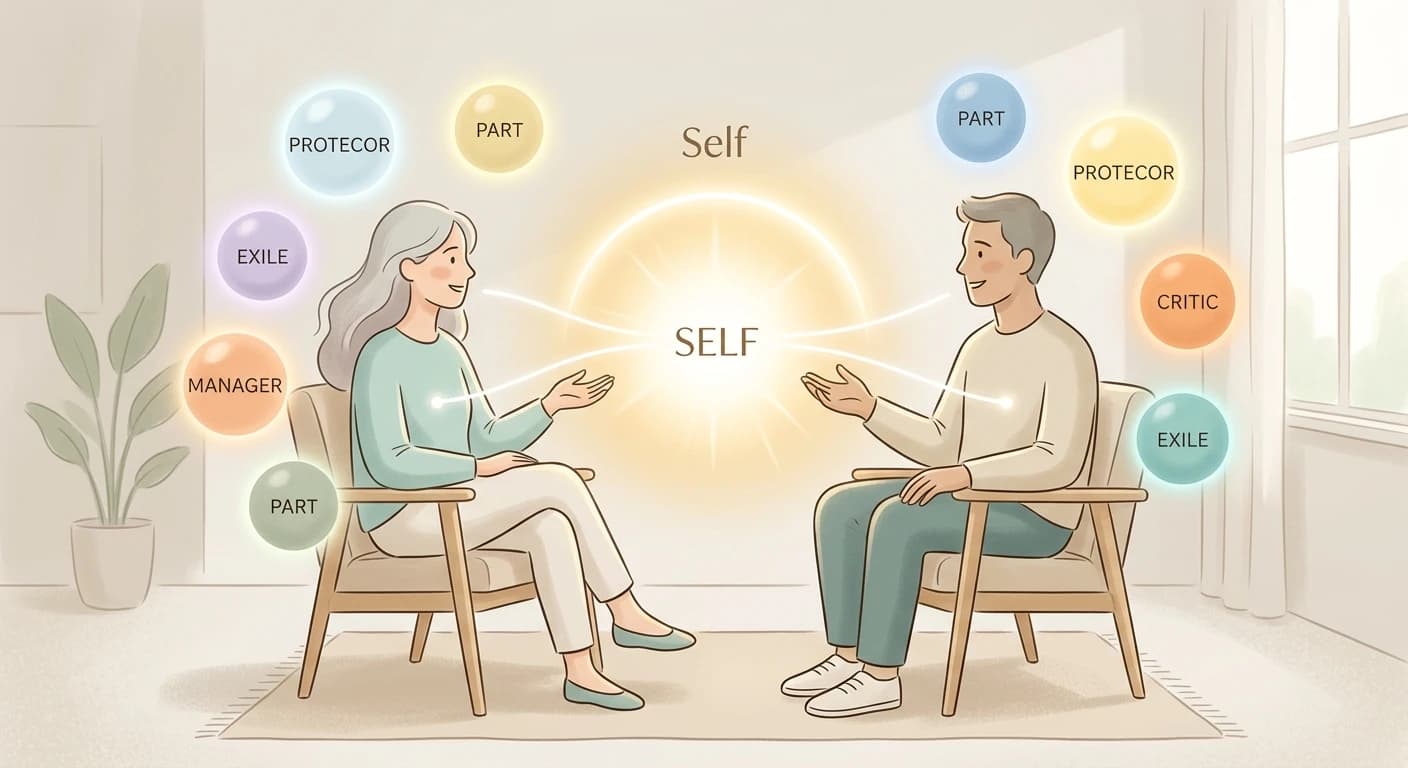
Developed by Dr. Richard Schwartz, IFS is a therapeutic model that views the mind as being made up of distinct “Parts,” each with its own personality, role, and motivations. When exploring IFS for couples, this framework helps partners understand their inner systems. At the center of this system is the Self, a calm, compassionate leader capable of healing and harmonizing these Parts.
Read a detailed walkthrough of an IFS session.
In relationships, your Parts interact not only with your inner system but also with your partner’s Parts. For example:
- Your Protective Part (like defensiveness) might clash with your partner’s critical Part.
- Your Exiled Part (like shame or fear of rejection) might be triggered by a simple comment.
By understanding these dynamics, IFS empowers couples to relate from their Self rather than their reactive Parts, fostering deeper trust and connection.

Why IFS for Couples Works
1. Understanding Emotional Triggers
Every couple experiences moments where a comment or action sparks an emotional reaction. These triggers are often rooted in past experiences and Exiled Parts carrying unresolved wounds.
IFS helps partners recognize:
- What triggers them.
- Which Part is being activated.
- How to respond with compassion instead of reactivity.
2. Building Empathy Through Self-Energy
When both partners connect with their Self, communication becomes more open and empathetic. Instead of blaming or withdrawing, they can:
- Listen with curiosity.
- Validate each other’s feelings.
- Collaborate to address underlying issues.

3. Transforming Conflicts into Opportunities
With IFS, conflicts become an opportunity for growth rather than a source of division. By addressing the Parts fueling disagreements, couples can:
- De-escalate tensions.
- Understand each other’s needs.
- Create lasting resolutions. Understand what Parts are in IFS
To dive deeper into resolving internal and relational conflicts, consider watching our recorded Understanding and Healing Parts in Conflict (Polarizations) workshop led by Sasha Eslami. This on-demand session will teach you how to identify and reconcile conflicting Parts at your own pace.
What the IFS for Couples & Relationships Course Offers
Our IFS for Couples & Relationships Course is designed to help couples integrate these principles into their daily lives. Whether you’re new to IFS or already familiar with its basics, this course will equip you with tools to navigate your relationship with greater ease and harmony.
Key Features of the Course
- Understanding Relational Patterns: Learn to identify and work with the Parts that shape your interactions.
- Developing Self-Leadership: Discover how to lead your relationship from a place of calm, clarity, and compassion.
- Rebuilding Trust: Heal past wounds that may be impacting your ability to trust and connect with each other.
- Practical Exercises and Tools: Engage in guided activities to improve communication, address conflicts, and nurture intimacy.
- Integration Support: Apply what you learn with step-by-step guidance for real-world relationship challenges.

Common Relationship Patterns Addressed by IFS
1. The Pursuer-Distancer Dynamic
What it looks like: One partner seeks closeness (Pursuer) while the other retreats (Distancer).
How IFS helps: Helps each partner explore the Parts driving their behavior and find healthier ways to connect.
2. Emotional Avoidance
What it looks like: Avoiding difficult conversations or shutting down emotionally.
How IFS helps: Encourages Self-led communication to address fears and build trust.
3. Reactive Defensiveness
What it looks like: Responding to feedback with anger, denial, or withdrawal.
How IFS helps: Soothes Protector Parts, allowing for constructive dialogue.
4. Overlapping Trauma Responses
What it looks like: Both partners’ unresolved wounds amplify each other’s pain.
How IFS helps: Supports healing Exiles and reducing the intensity of triggers.

The Science Behind IFS in Relationships
IFS has been recognized as an evidence-based practice by the National Registry of Evidence-Based Programs and Practices (NREPP). Research demonstrates its effectiveness in:
- Improving emotional regulation.
- Reducing relational conflict.
- Enhancing overall well-being.
A study published in the Journal of Marital and Family Therapy found that couples practicing IFS techniques reported:
- Increased relationship satisfaction.
- Greater emotional intimacy.
- Reduced conflict frequency and intensity.
By addressing the root causes of relational patterns rather than just the symptoms, IFS creates lasting change. It’s like upgrading your relationship software for smoother operations!
How to Get Started with IFS for Couples
1. Enroll in the IFS for Couples & Relationships Course
This comprehensive course provides everything you need to understand your Parts, strengthen your bond, and cultivate a healthier relationship.
Watch our recorded IFS For Couples & Relationships workshop led by Sasha Eslami to deepen your emotional connection at your own pace.
2. Use the IFS Guide App
Stay connected to your inner work with the IFS Guide App, a pocket-sized tool to track your Parts, practice dialogue, and build Self-leadership skills.
Download the IFS Guide App here to start tracking your parts.
3. Work with an IFS Practitioner
For personalized support, consider working with a therapist trained in IFS for couples. They can guide you through the process and help tailor strategies to your unique relationship dynamics.
Practical Tips for Applying IFS in Your Relationship
Pause During Conflicts
When tensions rise, pause and ask: “Which Part of me is activated right now?” This creates space for your Self to step in and respond thoughtfully instead of reacting impulsively.
Name the Parts
Share with your partner: “I think my defensive Part is showing up because I’m feeling vulnerable.” This helps both of you understand the underlying dynamics and fosters empathy.
Lead with Self-Energy
Before reacting, connect with your Self by focusing on calmness, curiosity, and compassion. This helps you approach interactions with a clear and loving mindset.
Practice Active Listening
Show curiosity about your partner’s Parts. Ask: “What’s coming up for you right now?” This encourages open dialogue and deeper understanding.

Common Mistakes to Avoid
- Trying to 'fix' your partner's Parts instead of listening to them with curiosity.
- Using IFS language to bypass genuine emotions (e.g., dismissing them by saying, 'That's just your angry Part talking').
- Forgetting to check in with your own Parts before addressing your partner's triggers.
Final Thoughts: Building a Self-Led Relationship
Relationships thrive when both partners feel understood, valued, and supported. The IFS for Couples & Relationships Course provides a proven framework to achieve this by fostering compassion, healing past wounds, and strengthening communication.
Start your journey today to build a relationship rooted in connection, trust, and growth.
Your most fulfilling relationship awaits!
Frequently Asked Questions
IFS provides a safe, compassionate framework to navigate the expanded states of consciousness often experienced during psychedelic-assisted therapy, helping to integrate the insights gained and heal deep-seated Parts.
Yes, IFS helps partners understand their own and each other's Parts, fostering empathy, reducing reactivity, and building a stronger foundation for communication.
Start by focusing on your own Parts and leading with Self-energy. Often, when one partner shifts their approach, the dynamic naturally changes, inviting the other partner to engage more openly.
Not at all! While IFS is highly effective for resolving deep conflicts, it is equally valuable for couples looking to enhance their intimacy, improve communication, and build a stronger, more resilient connection.
I
Written by
IFS Guide Editorial Team

Reviewed by
Sasha Eslami
Level 3 IFS Practitioner