









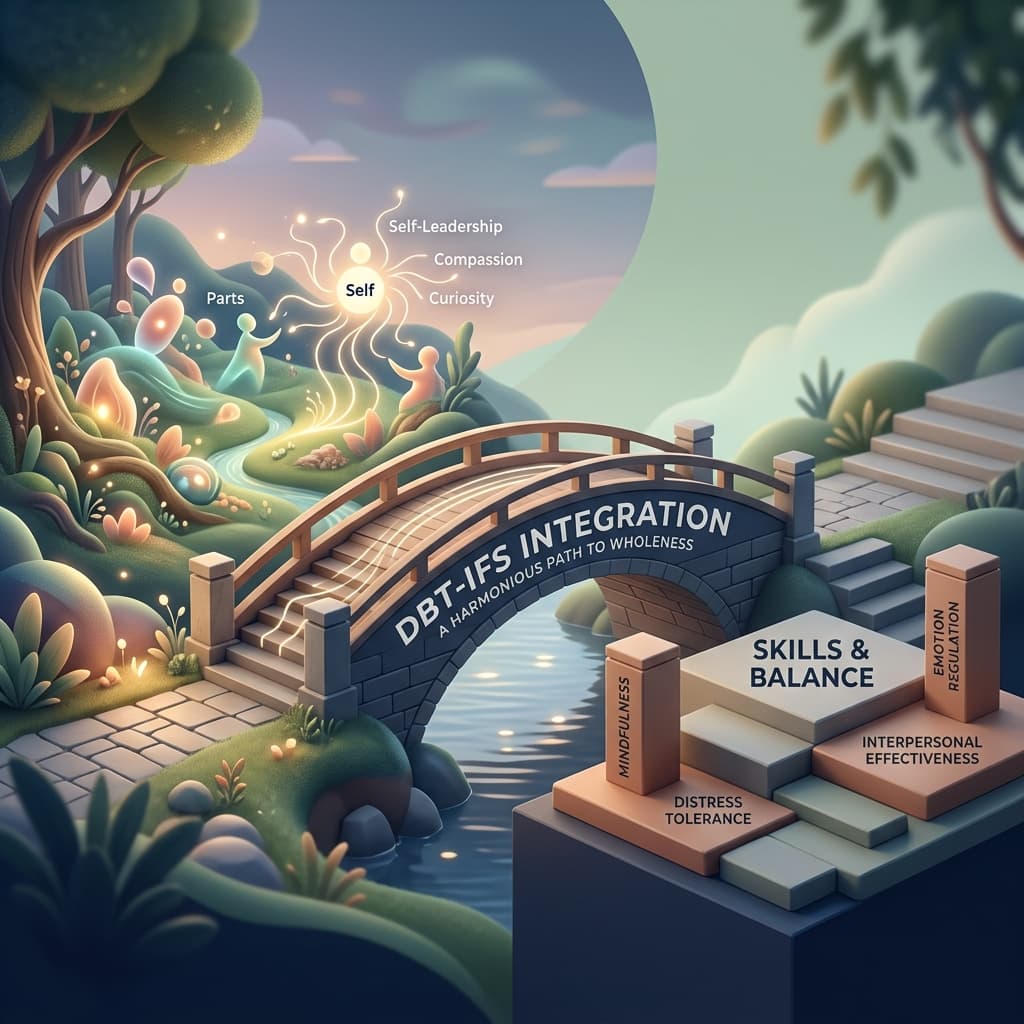
The Power of Integration 🤝🌟
When you blend DBT’s structure with IFS’s compassionate inner work, therapy becomes more than just "coping"—it becomes healing.
More Effective
Fewer emotional tornadoes and quicker recovery when they do happen.
More Sustainable
DBT skills stop feeling like a chore and start feeling like an extension of your Self.
More Profound
Move beyond surface-level behavioral change into deep, cellular healing.
DBT's Four Core Skills (with an IFS Twist!) 🧩✨
Mindfulness: Staying Present 🧘♂️🌿
The DBT Skill
Observing thoughts and feelings without judgment.
The IFS Twist
Instead of just saying 'I feel anxious,' IFS helps you notice a PART of you feels anxious. This shift creates the space needed for compassion.
Distress Tolerance: Managing Crisis 🚦🔥
The DBT Skill
Surviving emotional crises using skills like STOP and TIPP.
The IFS Twist
While DBT suggests distraction, IFS asks: 'Which Part is overwhelmed, and what does it need?' You aren't just pushing pain away; you're caring for it.
Emotion Regulation: Understanding Feelings 🌊🛠️
The DBT Skill
Naming emotions and reducing vulnerability to triggers.
The IFS Twist
DBT encourages reframing thoughts. IFS goes deeper: 'Which Part is carrying this emotion—and why?' Exploring the source leads to unburdening.
Interpersonal Effectiveness: Boundaries 💬💛
The DBT Skill
Asking for what you need and setting healthy boundaries.
The IFS Twist
If a Part screams 'No, they will reject us!', IFS helps that fearful Part feel safe so you can genuinely adopt healthy new behaviors.
Practical Strategies 🛠️🧘♀️
How to start using both models in your daily life.
Mindfulness for Blending
Use DBT's 'Observe' skill to notice when a Part is hijacking your system. 'I notice an Angry Part is very active right now.'
Regulation Before Exploration
Use DBT's 'Paced Breathing' to calm your nervous system first. This creates enough Self-energy to safely explore your Parts.
Addressing Resistance
If a Part resists a new DBT skill, don't force it. Talk to that Part! Reassure it that the skill is there to help, not replace it.
Assertiveness & Exile Work
When struggling to set a boundary, find the Exile carrying rejection wounds. Heal that Part first, then use DBT tools to speak up.
Common Questions ❓
Q: What's the main difference?
A: IFS heals the roots by addressing 'Parts,' while DBT provides structure for managing daily emotional and relationship challenges.
Q: Can I use them together?
A: Absolutely! Most practitioners find they enhance each other. DBT stabilizes the system so that IFS work can go deeper.
Q: Which one should I start with?
A: If you are in a crisis, DBT skills are great for immediate stability. If you want to change long-standing patterns, IFS is the key.
Scale Your Healing 🌅🕊️
The IFS Guide App integrates these principles into guided sessions, helping you regulate and heal in real-time.
Want to go deeper?
Subscribe to our newsletter for the latest IFS challenges, workshops, and wellness news.
By clicking 'Subscribe', you agree to our Privacy Policy and consent to receive emails and updates according to your subscription preferences. You can unsubscribe at any time.