








Last updated July 26, 2026
Reviewed by Sasha Eslami, Level 3 IFS Practitioner · July 26, 2026
Integrating IFS with Somatic Experiencing for Trauma Healing


The Power of Combining IFS and Somatic Experiencing
Integrating IFS with Somatic Experiencing offers a holistic approach—one that honors both the psychological and physiological aspects of our experience. Two of the most effective trauma-healing modalities today are Internal Family Systems (IFS) and Somatic Experiencing (SE).
IFS, developed by Dr. Richard Schwartz, focuses on understanding and healing the internal Parts of our psyche, particularly the wounded Exiles and their protective counterparts. Meanwhile, Somatic Experiencing, pioneered by Dr. Peter Levine, is a body-based approach that helps release stored trauma from the nervous system by working with sensations, movement, and bodily awareness.
By integrating IFS and SE, we create a powerful, whole-body healing process—one that helps people connect with their Parts while also discharging trauma stored in the body. If you want to explore the body-based side of Parts work more deeply, see our guide to Somatic IFS. (It’s a bit like giving your inner world a spa day—minus the cucumber slices!)
Understanding Internal Family Systems (IFS) and Somatic Experiencing (SE)
What is Internal Family Systems (IFS)?
IFS is a parts-based therapy that sees the psyche as composed of different subpersonalities, each with its own emotions, beliefs, and roles. Think of them like characters in a play—some are heroes, some are protectors, and some just want to nap. To learn more about the foundations of this approach, read our comprehensive guide on What is Internal Family Systems (IFS) Therapy.
The Core Elements of IFS:
IFS helps us recognize and communicate with these Parts so we can heal our Exiles and create internal harmony—kind of like getting the whole cast of characters to work as a dream team.
What is Somatic Experiencing (SE)?
SE is a body-centered trauma therapy that focuses on nervous system regulation and the release of stored trauma through sensory awareness and movement. Think of it as inviting your body to share its wisdom—without needing a dictionary.
Key Concepts in SE:
- Fight, Flight, Freeze Responses – The body’s natural survival mechanisms in response to trauma
- Titration – Slowly processing trauma to prevent overwhelm
- Pendulation – Moving between distress and safety to regulate emotions
- Completion of Self-Protective Responses – Releasing trapped survival energy through movement
Rather than revisiting traumatic memories cognitively, SE guides the body in safely discharging stress and restoring equilibrium. (If your body could talk, it might say, “Thanks for finally letting me exhale that fear!”)
How Trauma Impacts the Mind and Body
When trauma occurs, it affects both the psyche and the nervous system—like two dance partners stumbling when the music is jarring.
1. IFS Perspective:
- Trauma creates Exiles that hold pain.
- Protectors work to prevent the Exile’s pain from surfacing (like security guards on high alert).
2. SE Perspective:
- Trauma leaves unresolved activation in the nervous system.
- This can manifest as anxiety, numbness, hypervigilance, or dissociation.
Integration Insight:
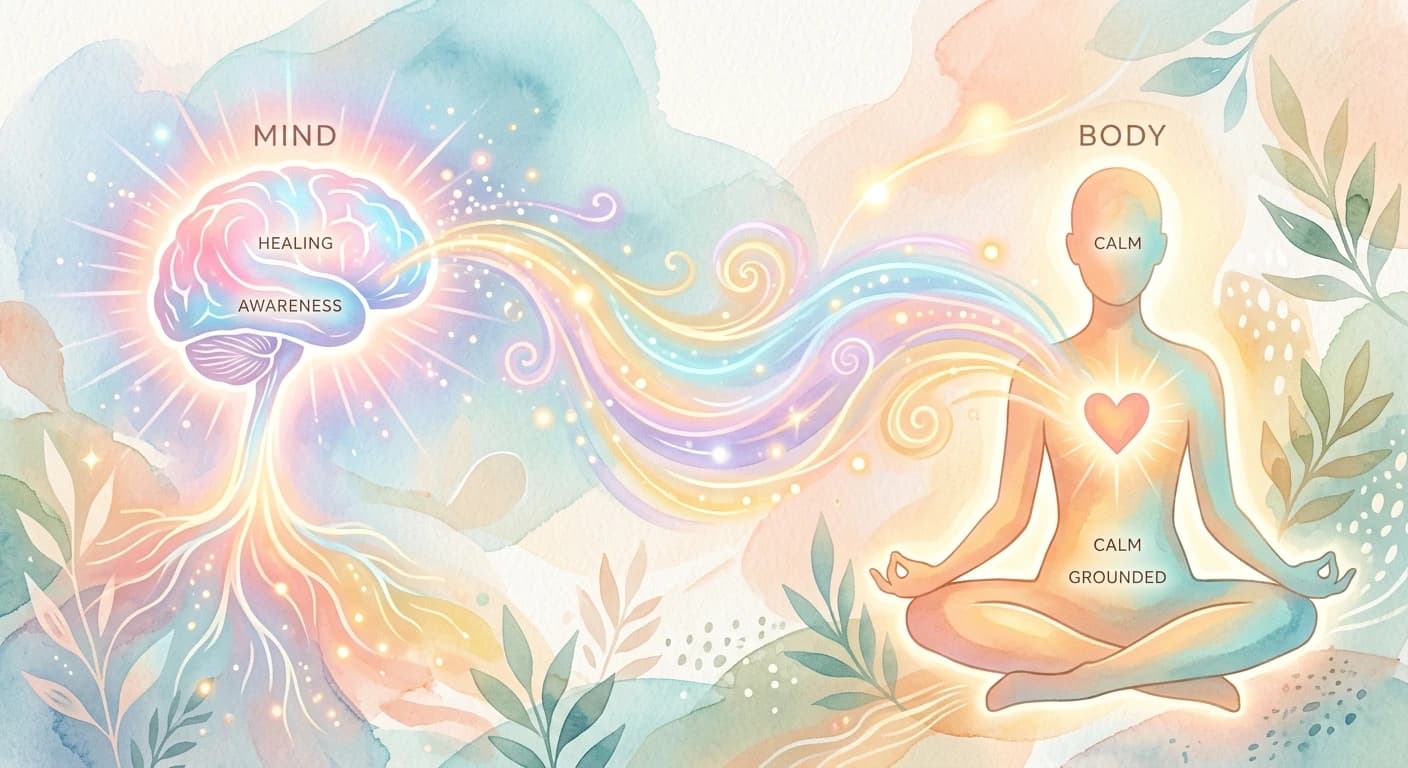
IFS helps you understand which Part is activated, while SE provides a way to release the stored trauma in the body. It’s the best of both worlds—mind and body dancing in harmony!
Why IFS and Somatic Experiencing Work So Well Together
Combining IFS and SE allows clients to:
- Recognize the Parts carrying trauma (IFS)
- Feel and release trauma through body awareness (SE)
- Develop nervous system resilience alongside emotional healing
How IFS Complements SE:
- IFS helps name and communicate with Parts that hold trauma.
- SE helps access the physical sensations linked to those Parts.
How SE Complements IFS:
- SE prevents emotional flooding when working with deep IFS processes.
- SE helps ground and stabilize the system before addressing Exiles.
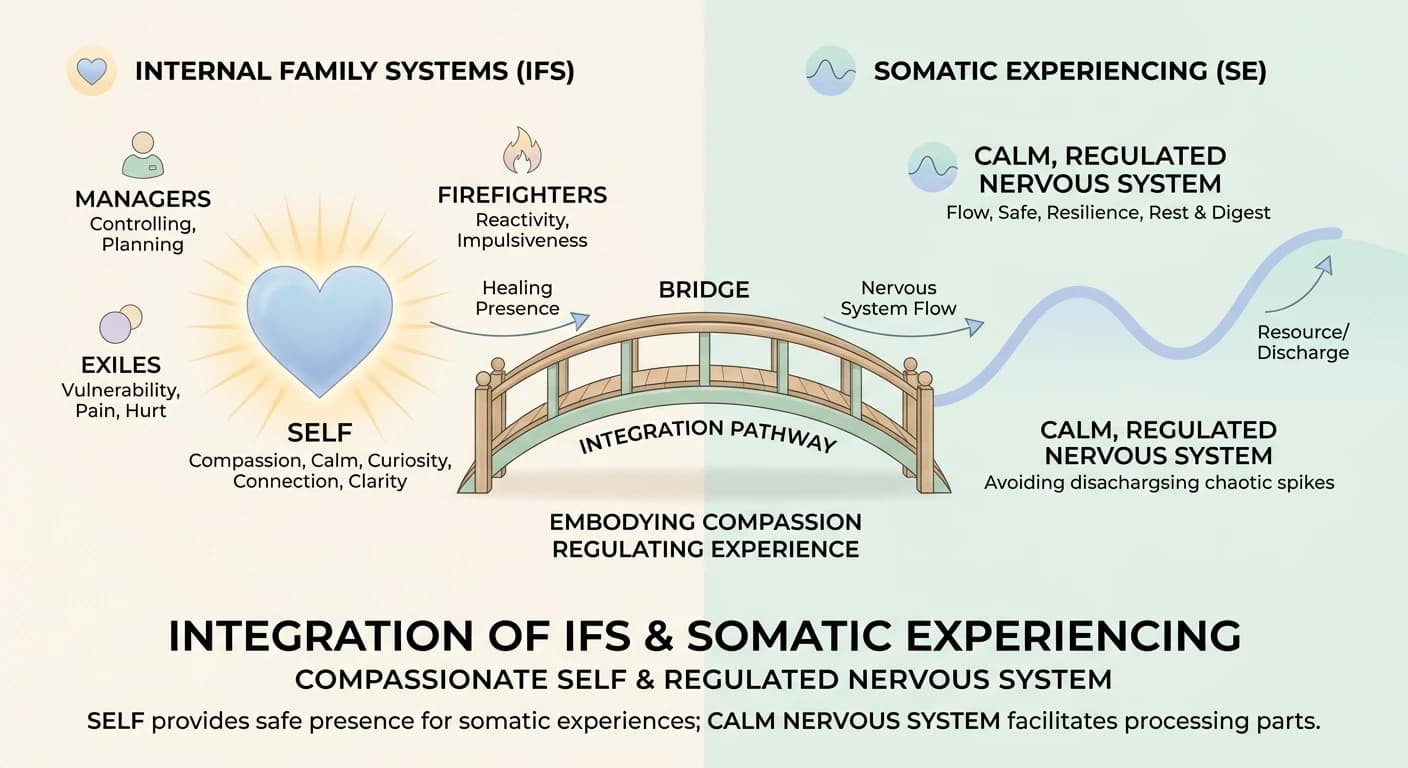
Key Takeaway: By using IFS for internal understanding and SE for body-based release, clients can heal trauma more completely—like stitching a wound inside and out.
Practical Techniques for Integrating IFS with Somatic Experiencing
1. Recognizing the Body’s Response to Parts
In IFS, we often identify which Part is activated, but sometimes, Parts show up in the body first—like a tightness in the chest or a flutter in the gut.
Exercise:
1. Notice a strong emotion (fear, sadness, anxiety).
2. Pause and scan your body—where do you feel it?
3. Ask: “Is there a Part here?”
4. Invite curiosity about the sensation without judgment.
This approach helps track how Parts show up somatically, encouraging a gentle curiosity instead of an “Oh no, not again!” reaction.
2. Using Pendulation to Work with IFS Parts
Pendulation (from SE) is the practice of moving between distress and safety—helping avoid overwhelm when exploring painful Exiles. Think of it like gently dipping your toes in cold water rather than cannonballing in.
Exercise:
1. Locate an Exile that feels emotionally intense.
2. Before engaging, focus on a grounding resource (like the breath or a calming memory).
3. Move between the Exile and a safe sensation to regulate the system.
This method prevents emotional flooding and helps the nervous system integrate healing without panic or meltdown.
3. Resourcing Before Engaging Firefighters
Since Firefighters often use impulsive behaviors (e.g., binge-eating, avoidance) to numb pain, we need body-based grounding techniques before working with them.
Exercise:
1. Identify the behavior (e.g., reaching for comfort food when stressed).
2. Pause and notice body sensations (maybe tightness in the stomach).
3. Offer a physical intervention (e.g., pressing feet into the floor).
4. Ask: “What are you trying to protect me from?”
This allows Firefighters to step back so deeper work can occur—rather than them storming in with a bucket of ice cream and Netflix.
4. Releasing Trauma Through Movement
SE teaches that trauma often gets trapped in the body. If a Part feels “stuck,” movement can help. Imagine letting your body lead a mini dance party for emotional release!
Exercise:
1. Identify a Part that feels trapped (e.g., an Exile carrying fear).
2. Ask the Part: “If you could move, what would you do?”
3. Let the body respond—this could be shaking, stretching, or even running in place.
This process helps trapped energy discharge safely, allowing those Exiles to breathe freely again.
Real-Life Example: Using IFS and SE Together
Case Study: Healing Childhood Trauma
- Client: Sarah, a 40-year-old woman with panic attacks.
- IFS Insight: A strong Firefighter used dissociation to avoid her Exile’s fear.
- SE Integration: She worked with body awareness to track sensations (like tension in her chest).
Healing Process:
- Used SE grounding techniques to stabilize before engaging Parts.
- Connected with the Exile’s fear in small, manageable steps—no need for leaps into the deep end!
- Allowed the body to release stored fear through subtle movements—like gentle shaking or slow, deep breaths.
Outcome: Sarah’s panic attacks significantly decreased as her nervous system became more regulated. She felt a newfound sense of internal teamwork—like her body and mind were finally on speaking terms again.

- What to say to a protective Part: "I notice the tightness in my chest. Is it okay if we just sit with this feeling for a moment without trying to change it?"
- What to say when feeling overwhelmed: "I see you are trying to protect me. Let's take a step back and focus on the feeling of my feet on the floor."
- Common Mistake: Bypassing the protector to get directly to the somatic sensation of the Exile. Always slow down and build trust with the protector first.
When integrating these modalities, a common mistake is trying to force a physical release (like shaking or crying) before the protective Parts are fully on board. This can cause the system to backfire and trigger a protective shutdown. Always ask for permission from your protectors first.
If you want to dive deeper into working with these protective survival states, check out our recorded workshop, IFS for Freeze, Numbing, & Dissociation. Led by Sasha Eslami, this self-paced, on-demand video workshop helps you understand and gently work with the parts of your system that shut down, freeze, or dissociate to protect you from overwhelm.
Common Mistakes & Mini-Dialogues to Try
Conclusion: A Holistic Approach to Trauma Healing
By integrating IFS and Somatic Experiencing, we create a deeply effective method for trauma healing—one that:
- Helps clients understand and communicate with Parts
- Allows for gentle, body-based trauma release
- Prevents overwhelm by balancing cognitive and somatic work
Key Takeaway: The mind and body are deeply interconnected. When we work with both, true healing becomes possible—like a duet between your emotional world and your physical being.
Are you ready to explore IFS and SE together? Try the exercises above and experience the difference for yourself. You might just find a whole new sense of harmony in your inner world.
Integrating IFS with Somatic Experiencing means combining Parts work with body-based nervous system awareness. IFS helps you understand which Parts are activated, while Somatic Experiencing helps you notice and gently process the sensations, impulses, and survival energy held in the body.
Trauma often affects both the inner emotional system and the nervous system. IFS supports compassionate communication with Protectors and Exiles, while Somatic Experiencing supports regulation, grounding, and gradual release of stored activation.
Gentle practices like body scanning, grounding, and noticing Parts can be useful for self-reflection. However, if you are working with intense trauma, dissociation, panic, or overwhelm, it is best to work with a trained therapist or practitioner.
No. This article is educational and can support personal insight, but it is not a substitute for professional mental health care. A qualified practitioner can help you apply these approaches safely and at a pace your system can tolerate.
I
Written by
IFS Guide Editorial Team

Reviewed by
Sasha Eslami
Level 3 IFS Practitioner