








Last updated November 16, 2026
Reviewed by Sasha Eslami, Level 3 IFS Practitioner · July 28, 2026
IFS Polarization: When Parts Are in Conflict

Introduction: The Tug-of-War Inside You
Ever felt stuck in a perpetual internal debate? One part of you shouts, “Take the risk!” while another part insists, “Play it safe.” Or maybe one side craves pizza 🍕, but another demands strict dieting. In Internal Family Systems (IFS), these inner battles are known as IFS polarization—when two or more Parts pull you in opposite directions.
Polarization leads to tension, indecision, and emotional strain, making you feel torn between conflicting urges. The upside? By approaching these inner conflicts with curiosity and compassion, polarization can become a gateway to deeper self-awareness and healing. ✨💖
Learn about Inner Critics in IFS
What Is Polarization in IFS?

Polarization occurs when two (or more) Parts are locked in opposition, each pushing its own strategy or viewpoint. They might have clashing goals or methods, leaving you feeling overwhelmed or paralyzed in indecision. 🤯😬
Why Polarization Happens
- Conflicting Strategies: Parts adopt different ways to protect you from harm.Example: One Part wants perfection to avoid criticism, another prefers procrastination to dodge failure altogether.
- Unhealed Exiles: Polarized Parts often serve as Protectors for deeper Exiles carrying emotional wounds.Example: If an Exile feels rejected, one Part seeks approval while another avoids vulnerability.
- Lack of Self-Leadership: Without your calm, compassionate Self in charge, Protectors step in and clash.
Polarization doesn’t mean something is “wrong” with you; it’s just your inner committee having a spirited debate without a moderator. 😂🤝
Examples of Polarized Parts
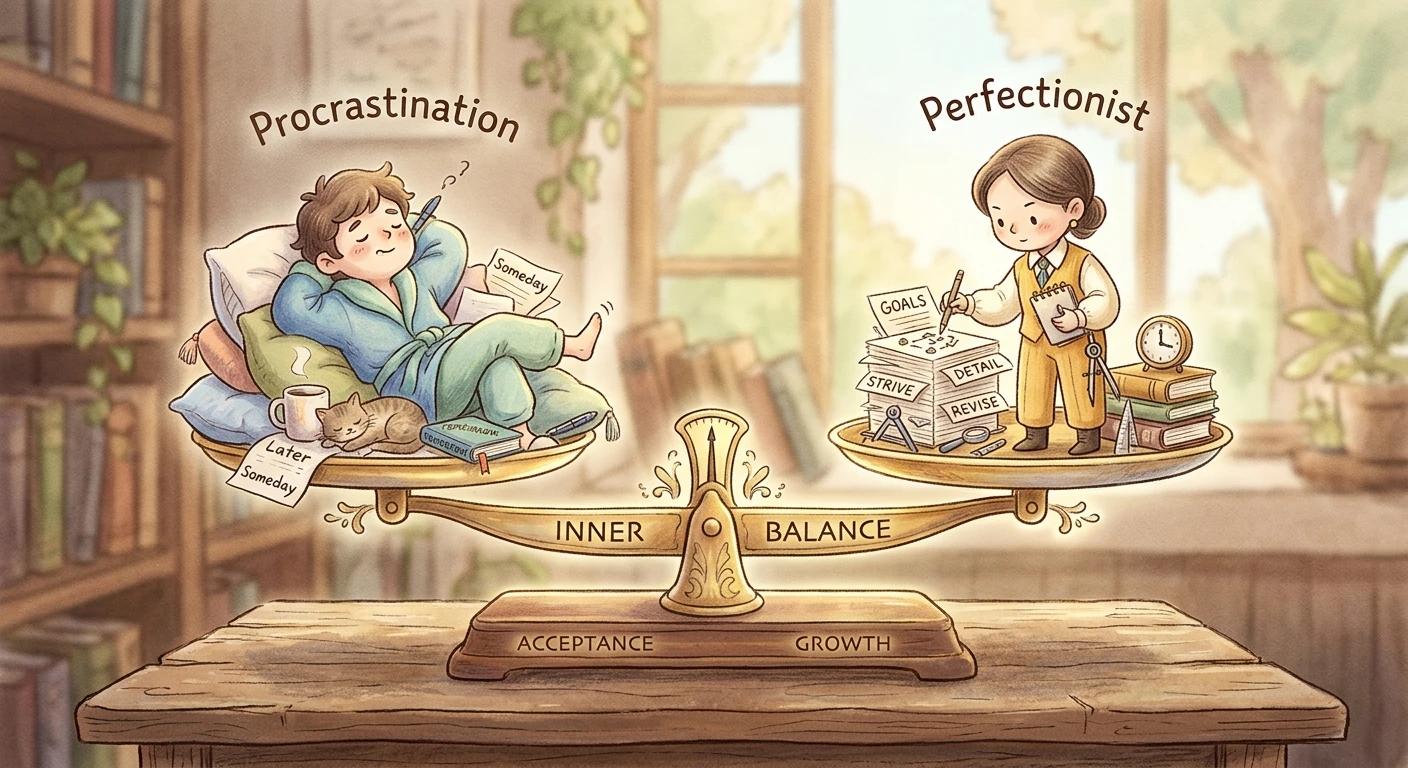
- The Procrastinator vs. The PerfectionistProcrastinator: “Let’s avoid this task—it’s too stressful!” 😵💫Perfectionist: “We must do this perfectly, or we’ll fail!” 🎯Both aim to protect—one from overwhelm, the other from criticism.
- The Caregiver vs. The Boundary-SetterCaregiver: “Always put others first to feel loved.” 🤗Boundary-Setter: “Protect our space and energy, or we’ll burn out.” 🚧This tug-of-war might stem from fear of rejection versus a need for self-care.
- The Risk-Taker vs. The Cautious PlannerRisk-Taker: “No guts, no glory—let’s dive in!” 🌊💥Cautious Planner: “Hang on—let’s craft a detailed plan first.” 🗒️Here, excitement and security lock horns over how best to move forward.
Polarized Parts are like two chefs in one kitchen, arguing recipes while dinner sizzles unattended.
Learn about Procrastination in IFS
Common Examples of Polarization in IFS
Polarization can appear in relationships, work, decision-making and everyday habits. Here are some common examples of parts with competing strategies.
Polarized PartsFirst Part's StrategySecond Part's StrategyPossible Shared ConcernPerfectionist vs. ProcrastinatorPushes for flawless resultsAvoids starting stressful tasksFear of failure or criticismPeople-Pleaser vs. Boundary-SetterPrioritizes others' approvalProtects personal needs and limitsFear of rejection or overwhelmAchiever vs. Rest-SeekerPushes for constant productivityWants to slow down and recoverFear of inadequacy or exhaustionRisk-Taker vs. Cautious PlannerEncourages new experiencesTries to prevent uncertaintyDesire for safety and fulfillmentInner Critic vs. Self-DefenderCriticizes mistakes to prevent rejectionReacts strongly to criticismFear of shame or humiliationConnection-Seeker vs. Avoidant ProtectorWants closeness and intimacyKeeps emotional distanceFear of abandonment or vulnerability
These are illustrative patterns, not fixed categories. Parts that appear to be opposites may have different fears, histories and intentions. In IFS, we explore each part's experience rather than assuming what it protects.
The Impact of Polarization on Your System

When Parts clash, your entire system feels it:
- Emotional Drain: Constant back-and-forth can sap your energy. 😩
- Indecision: You may get stuck in “analysis paralysis,” unable to choose a path.
- Increased Anxiety: The tug-of-war amplifies stress and worry. 😟
Without resolution, these Parts might escalate, creating turmoil. It’s like being on a seesaw that never quite settles. ⚖️🤹♀️
How to Resolve Polarization in IFS

Step 1: Recognize the Polarized Parts
Identify the Parts that seem to be at odds. Notice:
- Repetitive inner debates or “Yes/No” loops.
- Contrasting emotions or impulses demanding different actions. 🤔🤷♂️Example: “Part of me wants to binge-watch TV, but another insists on tackling my to-do list.”
Step 2: Invite Self to Lead
Your Self—calm, compassionate, and clear—serves as the mediator. To tap into Self-energy:
- Take some deep breaths to center yourself. 🌬️💆♀️
- Affirm you’re here to listen and help each Part without judgment.
Self-leadership is like stepping into a wise moderator role at a heated family meeting. 🕊️😌
If you find yourself strongly identified with one side of the conflict, learning about unblending may help you create more space to listen to both parts.
Step 3: Hear Each Part’s Perspective
Offer each Part empathy and curiosity. Ask:
- “What are you protecting me from?”
- “What do you fear will happen if we follow the other Part?”
- “What’s your biggest hope for me?”
You’ll likely discover they share a deeper goal—like safety, success, or belonging—even if their methods differ. 🌈🤗
Step 4: Find Common Ground
Once Parts feel heard, explore how they can relate to each other:
- Mutual Understanding: Help the parts hear each other's true intentions. Often, recognizing they share a deeper goal (like keeping you safe) reduces the intensity of the conflict.
- Voluntary Shifts: See if they are open to trying a new approach, but remember they are never forced to compromise or change their protective strategies before they are ready. 🎉
Step 5: Address Underlying Exiles
Polarized Parts often protect Exiles burdened by pain or fear. Once the Protectors relax, you can gently connect with these Exiles to offer reassurance and healing. 💗🌟
Example: If an Exile carries fear of failure, soothe it with compassion and help it release its burden. Reduced fear means less reason for Parts to clash.
If one or both parts are not ready to cooperate, that is okay. Polarization work can begin with listening and understanding, without forcing either part to change its position.
A Simple IFS Exercise for Working with Polarized Parts
- Identify the two opposing parts. Notice the conflicting thoughts, emotions or impulses. Give each part a simple descriptive name if that feels helpful.
- Notice how you feel toward each part. If you strongly prefer one part or dislike the other, another part may be blended with you. Acknowledge that reaction before continuing.
- Listen to one part at a time. Ask what each part wants you to understand and what it fears might happen if the other part gets its way.
- Appreciate both protective intentions. Recognize that each part may be trying to help, even if its approach creates difficulties.
- Explore what each part needs. Ask whether either part would be willing to give you more space. Do not force agreement.
- Look for shared concerns. Notice whether both parts care about safety, belonging, success or another important need.
- Let the process unfold gradually. You do not have to solve the conflict immediately. Building trust with both parts may be a meaningful first step.
When two parts are pulling you in opposite directions, the first goal is not to choose a winner. It is to understand each part's concerns and create space for Self-led curiosity.
Neither part has to win. The purpose of this conversation is to build understanding and trust, so decisions are not driven entirely by one side of the conflict.
Example: The Achiever and the Rest-Seeker
<b>Self:</b> I notice one part wants me to keep working, while another wants to stop. I'd like to understand both of you.<br><br><b>Achiever:</b> If we slow down, we'll fall behind and disappoint everyone.<br><br><b>Self:</b> Thank you for sharing that. What worries you most about resting?<br><br><b>Achiever:</b> That we'll fail and people won't respect us.<br><br><b>Self:</b> I hear you. I'd also like to understand the part that wants rest.<br><br><b>Rest-Seeker:</b> I'm exhausted. I feel like nobody listens until I make everything stop.<br><br><b>Self:</b> That sounds difficult. Thank you for telling me.<br><br><b>Rest-Seeker:</b> I don't want us to burn out.<br><br><b>Self:</b> It sounds like both of you are trying to protect us in different ways. Would you be willing to let me keep listening to both of you?
This is an illustrative example, not a real client session.
Working with polarized parts can sometimes bring up intense emotions or painful memories. If you feel overwhelmed, pause the exercise and return your attention to the present. Self-guided IFS is not a substitute for therapy, and a trained IFS therapist can help you explore difficult inner conflicts safely. If you are in crisis or thinking about harming yourself, contact your local emergency number. In the US, call or text 988. Outside the US, find a free helpline at findahelpline.com.
Practical Tips for Navigating Polarization
- Practice Self-Compassion 💖Remind yourself that all Parts have good intentions, even if they clash.
- Journaling 📖Create a dialogue between opposing Parts. Let them each voice their perspectives and wishes.
- Use Visualization 🌿Envision your Parts like characters in a meeting—imagine your Self calmly moderating the discussion.
- Therapeutic Support 🤝If polarization feels overwhelming, an IFS therapist can guide you through the process.
You can also use Parts Mapping to explore how different parts relate to one another.
Looking for a handy way to apply these steps in daily life? The IFS Guide App offers 24/7 AI-led IFS sessions (text or voice in any language), daily check-ins, self-healing meditations, parts mapping with auto-generated maps upon request, an in-app community, trailheads, reminders to talk to your Parts, and even a feature to track and revisit your Parts over time. Feel free to give it a try if you want a convenient companion on your IFS journey.
DOWNLOAD IFS GUIDE APP HERE
The Benefits of Resolving Polarization

When polarized Parts reach understanding, you’ll experience:
- Clarity: Decisions become easier as Parts align with Self.
- Emotional Harmony: Less inner tension means more peace. 😌
- Confidence & Trust: You learn to rely on Self-leadership to navigate challenges.
Polarization isn’t about “winning” or “losing”—it’s about listening, learning, and harmonizing your inner world. 🌍💞
Conclusion: Turning Conflict into Collaboration
Polarization in IFS isn’t a dead-end—it’s an opportunity to cultivate harmony. By welcoming your Parts’ concerns and inviting your Self to guide the conversation, you can transform inner battles into cooperative dialogues. 🤝✨
So, the next time your Parts start squabbling, pause, breathe, and remember: peace begins with understanding. 🕊️💬
Your journey to inner harmony starts now—one mindful conversation at a time. ✨💖
References
- Schwartz, R. C. (2021). No Bad Parts: Healing Trauma and Restoring Wholeness with the Internal Family Systems Model. Sounds True.
- Schwartz, R. C., & Sweezy, M. (2020). Internal Family Systems Therapy (2nd ed.). Guilford Press.
- IFS Institute. The Internal Family Systems Model Outline. https://ifs-institute.com/resources/articles/internal-family-systems-model-outline
I
Written by
IFS Guide Editorial Team

Reviewed by
Sasha Eslami
Level 3 IFS Practitioner