









Last updated July 13, 2026
Reviewed by Sasha Eslami, Level 3 IFS Practitioner · July 13, 2026
IFS and CBT for Cognitive Restructuring and Behavior Change
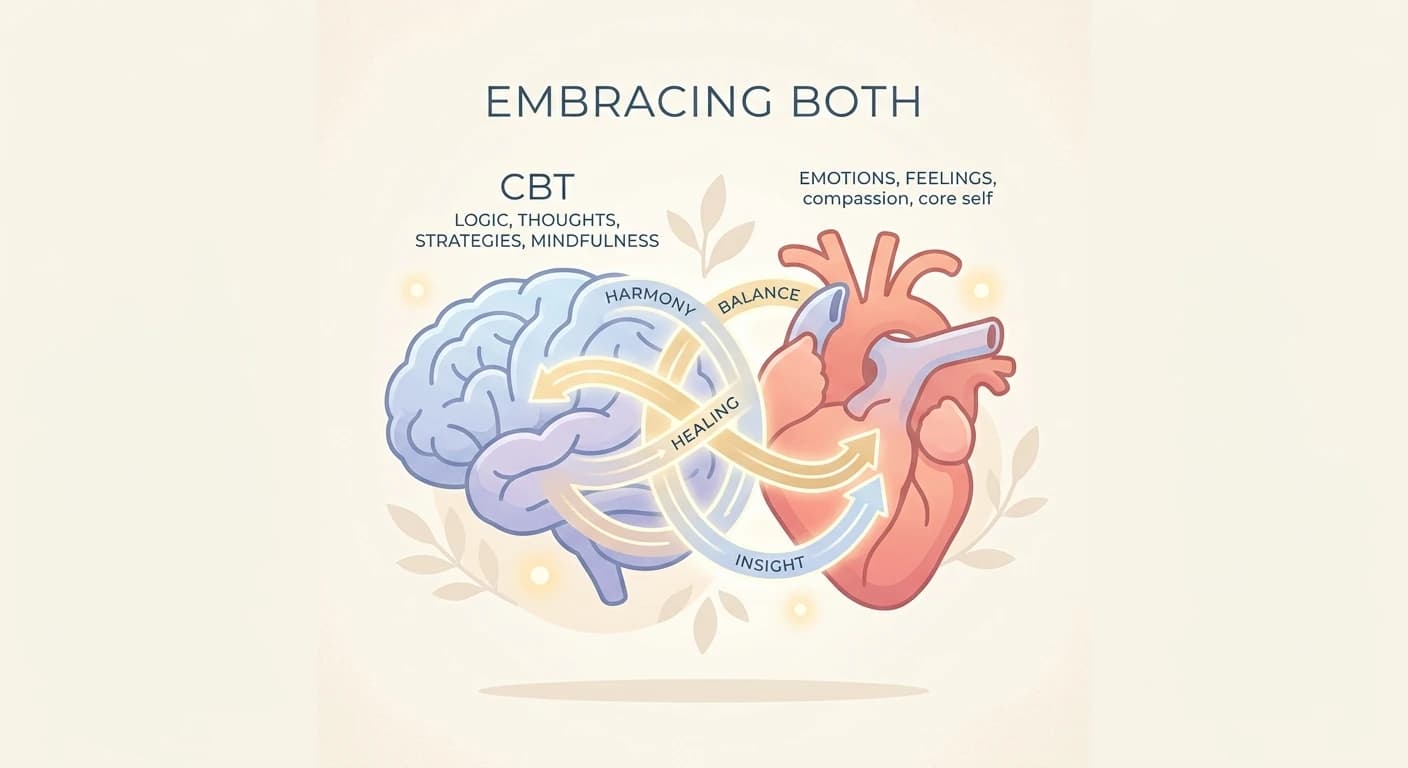
A Powerful Combination for Lasting Change
When used together, IFS and CBT create a powerful combination for tackling emotional challenges. While CBT helps spot and swap negative thoughts, deep emotional wounds can still linger.
Enter Internal Family Systems (IFS). Unlike CBT, Internal Family Systems goes deeper into the Parts of us that hold these thoughts, offering a complete mind-and-heart upgrade.
Cognitive Restructuring in CBT: The Basics
What is Cognitive Restructuring?
Cognitive restructuring is the bread and butter of CBT. It involves spotting negative or distorted thoughts and transforming them into more realistic, supportive ones.
Example: A person frequently thinks, “I always mess things up.” With cognitive restructuring, they learn to challenge that thought and replace it with something kinder, like “I make mistakes sometimes, but I also do many things well.”
Common Cognitive Distortions Addressed by CBT
CBT helps you recognize the mental gremlins we call cognitive distortions:
- All-or-Nothing Thinking (“If I fail this once, I’m doomed forever!”)
- Catastrophizing (“One slip-up and everything’s ruined!”)
- Personalization (“My friend is upset—definitely my fault!”)
- Mind Reading (“They secretly think I’m incompetent, I just know it!”)
How Cognitive Restructuring Works
1. Spot the Negative Thought: “I’m going to fail this exam.”
2. Name the Distortion: “That’s catastrophizing.”
3. Challenge It: “Have I failed every exam before?”
4. Reframe It: “I’ve studied hard. I might not get 100%, but I’ll do my best!”
But here’s the catch: CBT doesn’t always address the deeper “why” behind these thoughts. Enter IFS to dig a little deeper.

How IFS and CBT Work Together for Cognitive Restructuring
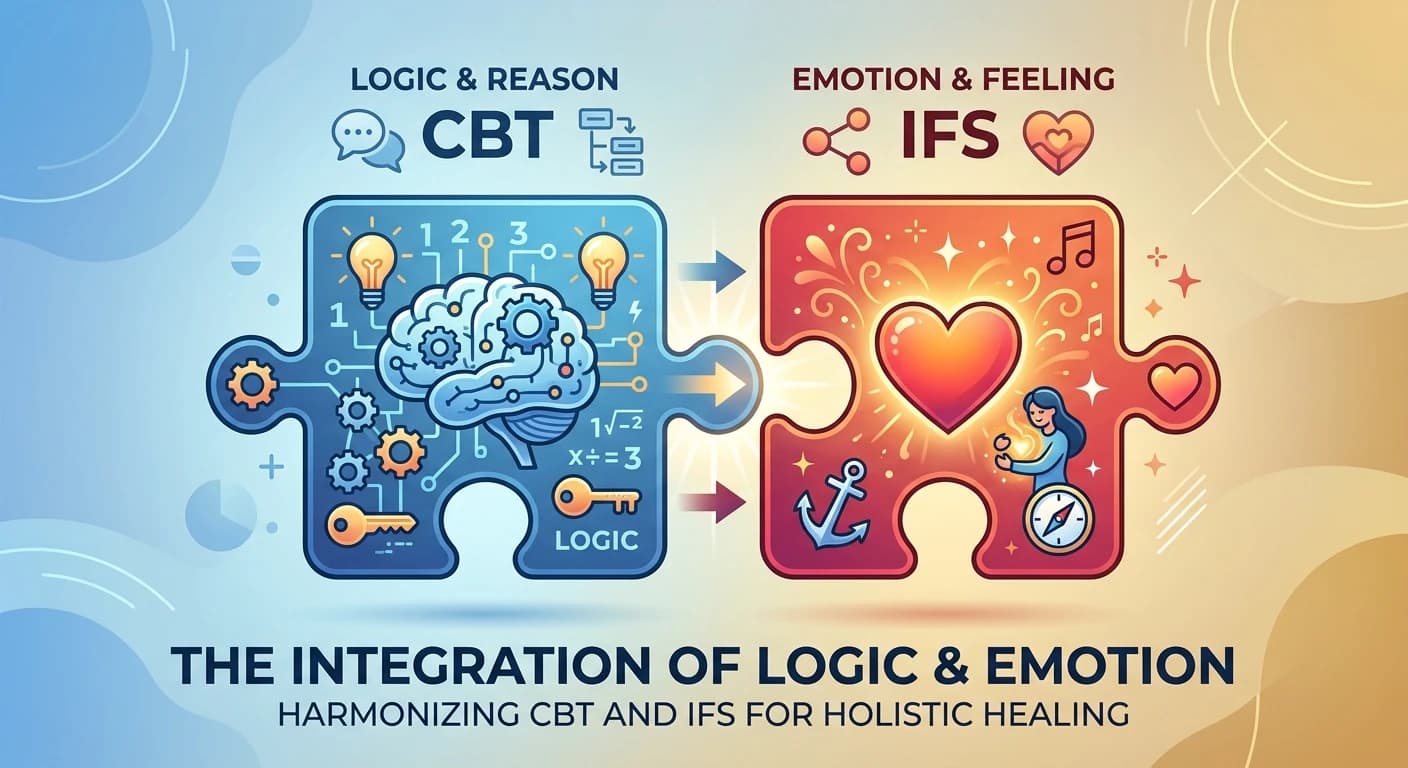
IFS brings compassion and emotional depth to CBT’s rational approach. Instead of just switching up the thought, we ask:
- Which Part of me is holding this belief?
- What is it trying to protect me from?
- How can I help this Part feel safe enough to let go of that old script?
When we heal the wounded Parts fueling those negative thoughts, the new, more positive perspective clicks into place naturally.
Integrating IFS with CBT for Lasting Cognitive Change
1. Identifying the Thought AND the Part That Holds It
CBT Approach: Recognize the negative thought and replace it with a more balanced one.
IFS Twist: Find out which Part is generating that thought—maybe it’s a self-critical Manager or a fearful Exile.
Example:
- Negative Thought: “I’m a total failure.”
- CBT: “What evidence do I have? Is that really true?”
- IFS: “Which Part of me believes this? What’s its story?”
Often, this Part is trying to keep you from feeling a deeper shame or fear. Once you address that, the thought loses its power.
2. Reframing Avoidance Behaviors with IFS and CBT
CBT suggests “behavioral activation”—doing meaningful activities despite feeling anxious or unmotivated. But if a Part is terrified, it might sabotage your plans.
Example: A client with social anxiety avoids all gatherings.
- CBT: Gradually expose yourself to social events.
- IFS: Identify the Protector Part that says “No way!” and the wounded Exile it’s shielding (maybe a memory of painful rejection).
Instead of brute-forcing yourself to the party, IFS helps heal the fear from within, making those new behaviors feel far less scary.
3. Addressing Core Beliefs More Deeply
CBT tackles negative core beliefs like “I’m unlovable” or “I’m unsafe,” but IFS takes you right to the Part holding that belief.
- CBT: Rework the belief with evidence-based thinking.
- IFS: Help the Exile carrying this belief unburden its pain.
Once that Exile is soothed, the belief naturally softens—less mental gymnastics required to maintain your new perspective.

Case Example: Using Both Approaches Together in Therapy
Client Issue: A woman struggles with anxiety and self-doubt, repeating, “I can’t handle anything challenging.”
- CBT Approach: Identify this as catastrophizing. Gather evidence to the contrary.
- IFS Approach: Notice a Protector Part behind the thought, anxious about a hidden Exile’s old fear. Possibly a younger Part remembers failing a big test in school!
- Therapy Blend: Challenge the thought using CBT, talk to that worried Part to understand its fears, and soothe the Exile carrying shame from past experiences.
Outcome: She adopts a healthier thought pattern (“I’ve handled challenges before, I can do it again!”) and releases old emotional baggage. True freedom!
Common Mistakes When Combining IFS and CBT
- Forcing a reframe too quickly: Trying to change a thought before validating the Part that holds it.
- Using CBT to bypass emotions: Intellectualizing the problem instead of feeling the underlying Exile's pain.
- Judging the Protector: Getting frustrated with a Part that resists behavioral activation, rather than getting curious about its fears.

Why This Integration Works So Well
- CBT gives you the roadmap to change your thoughts and behaviors.
- IFS heals the deeper emotional layers fueling those pesky negative beliefs.
- Together, they create lasting change—less chance of those thoughts roaring back when life gets tough.
Without healing underlying wounds, negative beliefs can keep sneaking in through the back door. With IFS + CBT, you lock that door securely!
Enhance Your IFS Journey with the IFS Guide App
The IFS Guide App offers 24/7 AI-guided IFS Sessions, Daily Check-Ins, adaptive Self-Healing Meditations, and Parts Mapping to visualize your Parts’ relationships. Additionally, you can join the In-App Community, explore guided Trailheads, set Reminders, and Track Parts to support your team’s shift toward Self-led leadership in real time.
Download the IFS Guide App
Final Thoughts: The Future of This Integration
Blending CBT’s logical prowess with IFS’s emotional wisdom is like having both a brainy best friend and a big-hearted mentor guiding you. This fusion:
- Empowers you to spot and adjust unhelpful thoughts.
- Compassionately addresses the Parts that hold old pain.
- Fosters transformation that sticks, because you’re healing from the inside out.
As these approaches continue to evolve, more therapists (and clients!) are discovering the magic of this duo. Why settle for half the solution when you can go all-in for mind and heart harmony?
Ready to try it? Whether you’re working with a therapist or diving into self-exploration, combining IFS and CBT can bring relief, clarity, and a whole lot of self-compassion.
FAQs About This Integrative Approach
Yes. IFS and CBT can complement each other well: CBT helps identify and reframe unhelpful thoughts, while IFS explores the Parts that may be carrying those thoughts or protecting you through certain behaviors.
Cognitive restructuring often focuses on changing the thought itself. IFS adds emotional depth by asking which Part holds the belief, what that Part is afraid of, and what it may need before the belief can soften naturally.
Neither approach is automatically better for everyone. CBT offers practical tools for behavior change, while IFS can help address the deeper emotional reasons a Part may resist that change. Together, they may support more lasting progress.
A trained therapist can be especially helpful, particularly when working with trauma, intense emotions, or deeply rooted beliefs. Some people also use self-reflection, journaling, and guided IFS tools to support the process between sessions.
I
Written by
IFS Guide Editorial Team

Reviewed by
Sasha Eslami
Level 3 IFS Practitioner